
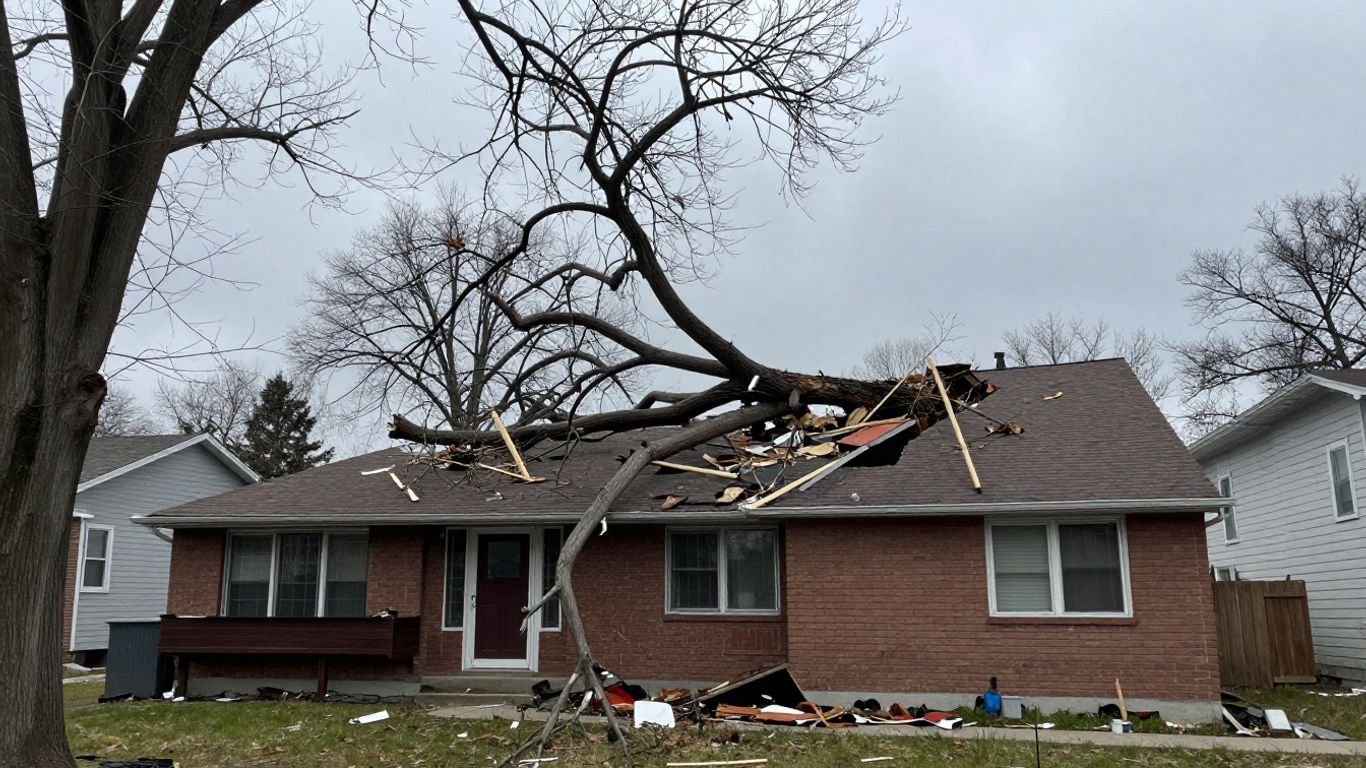
So, a tree fell on house in Toronto. It’s stressful, disorienting, and the damage can escalate fast if you don’t act in the right order. Suddenly, your quiet street has a big mess, and you’re left wondering what on earth to do next. Don’t panic, though. We’ve put together a simple guide to help you figure things out, from the immediate steps to take to understanding who’s responsible and how to prevent it from happening again. It can feel overwhelming, but breaking it down makes it much more manageable.
Key Takeaways
- Your immediate priority after a tree falls on your house is safety. Get everyone out of the house, especially if there’s structural damage or downed power lines. Don’t go back in for belongings. Knowing what to do when a tree falls on your house can save you thousands
- Document everything. Take clear photos and videos of the damage before anything is moved or repaired. This is vital for insurance claims and determining responsibility.
- Check your home insurance policy. Standard Ontario policies often cover structural repairs and tree removal from the house, but there might be limits or exclusions, especially for neglected trees.
- Figure out tree ownership. If it’s your tree, you’re generally responsible. If it’s your neighbour’s, they are usually responsible, unless negligence can be proven. For City of Toronto trees, report it to 311.
- Regular tree maintenance is key. Get professional assessments to spot issues like rot, cracks, or leaning. This can prevent future incidents and protect your insurance coverage.
What to Do in the First 30 Minutes After a Tree Falls on Your House
When a tree falls on your house. Deep breaths. The absolute first thing you need to do is get everyone, including pets, out of the house and to a safe distance. Secondary collapses are a serious risk, meaning more branches or even the rest of the trunk could come down, causing more damage or injury. Don’t even think about going back upstairs if you’re on a lower floor, and definitely don’t try to grab your favourite sweater or that family photo album from a damaged room. Safety first, always.
Once everyone is clear of the immediate danger zone, take a look around (from a safe distance, of course). Are there any downed power lines? Is there a smell of gas? If it’s safe to do so, and I mean really safe, you might want to shut off your gas and electricity. If you see any downed hydro lines, don’t go near them. Call 911 immediately, and if you can identify the utility company, give them a shout too. In Toronto, that would be Toronto Hydro. They need to know about downed lines right away.
Need emergency help right now? Our certified arborists are available 24/7 across the GTA. Call Us Now — We Respond Fast
Get Everyone Out — Secondary Collapse Is a Real Risk
Seriously, don’t mess around with this. The tree might have done its main damage, but it’s likely unstable. Think of it like a house of cards that’s been nudged – it could still topple further. This means getting all humans and animals outside and away from the structure. Don’t try to be a hero and retrieve belongings. That antique vase or your laptop can be replaced; you can’t. If you were on an upper floor when it happened, get downstairs and out. Don’t go back up to retrieve anything from rooms that look compromised.
Shut Off Gas and Electricity If It’s Safe to Do So
This is a big ‘if it’s safe’. If the tree has smashed into your electrical meter or gas line, or if you see wires hanging precariously, this is where you need to be extra cautious. If you smell gas, leave the area immediately and call 911 from a safe spot. If power lines are down anywhere near the tree or your house, consider that an emergency. Do not approach them. Contact 911 and Toronto Hydro right away. They have crews trained to handle these dangerous situations. If you can easily access your main breaker panel or gas shut-off valve without putting yourself at risk, then go ahead and turn them off. But if there’s any doubt, leave it to the professionals.
The immediate aftermath of a tree falling on your home is not the time for heroics or salvaging possessions. Your primary focus must be the safety of yourself and anyone else present. Structural integrity can be compromised in ways that aren’t immediately obvious, and downed electrical lines pose a lethal threat. Prioritize evacuation and contacting emergency services.
Document the Damage Before Anyone Touches Anything
Okay, so the big tree is down, and it’s sitting on your house. Deep breaths. Before you even think about calling a cleanup crew or trying to move a single branch, you need to document everything. Seriously, this is super important for your insurance claim.
Take pictures and videos of the damage from every angle. Get close-ups of the broken branches, the damage to your roof, walls, or whatever else the tree hit. Also, step back and get wider shots showing the whole scene. Think about what was there before – maybe you have old photos of your house or the tree? That could be helpful too.
Here’s a quick checklist of what to capture:
- The tree itself, where it landed, and how it’s resting on your house.
- Any visible damage to your home’s structure (roof, siding, windows, foundation).
- Damage to any personal property, both inside and outside your home.
- The surrounding area, including any downed power lines (but don’t get too close!).
- The base of the tree and the ground where it fell from, looking for signs of rot or instability.
It might feel a bit morbid, but try to get as much detail as possible. This evidence is what your insurance adjuster will use to figure out the extent of the damage and what needs to be repaired or replaced. Don’t move anything, don’t start cleaning up, just document. It’s the best way to make sure your claim goes smoothly and you get the coverage you’re entitled to.
How Ontario Home Insurance Handles a Fallen Tree
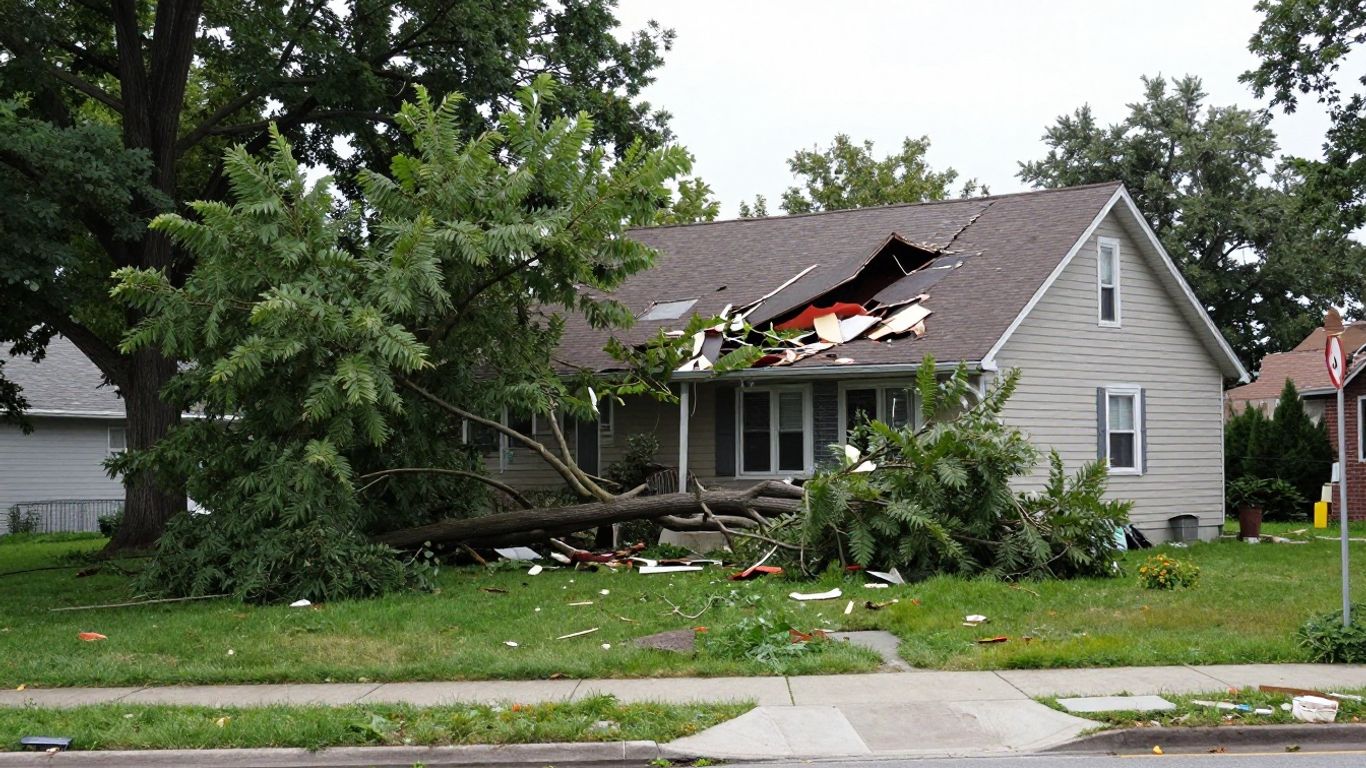
When a tree fell on your house can leave you with a mess and a lot of questions, especially about insurance. Here’s how things typically play out for Ontario homeowners, broken down into the key areas you need to know.
What’s Typically Covered Under a Standard Ontario Policy
Most Ontario homeowners’ policies cover damage to your house, detached structures, and sometimes the removal of the tree if it fell due to a covered event, like wind or lightning. Usually, policies help pay for:
- Repairs to damaged parts of your home—roof, walls, shed or fence.
- Removal of the tree only if it fell onto a covered structure, not just on your lawn or driveway.
- Additional living expenses if you can’t stay at home while repairs happen.
- Some contents inside the house, if they got damaged.
Here’s a quick table showing common coverages and typical caps:
| Damage or Expense | Standard Policy Coverage | Common Limits |
|---|---|---|
| Structural damage | Yes | Up to policy limit |
| Tree removal (from house) | Yes (if on structure) | $500–$1,000 per claim |
| Tree removal (yard only) | Rarely | Usually excluded |
| Contents (inside house) | Sometimes | Up to policy limit |
| Temporary accommodations | Yes | Up to policy limit |
Policies can differ, so double-check the fine print and call your provider right away. In the meantime, learn about professional tree risk assessments that can help document your tree’s condition for insurers.
When Your Claim Can Be Denied — And How to Avoid It
Don’t assume every fallen tree is insured! Claims may be turned down if:
- The tree that fell was already dead, dying, or rotting, and you ignored it.
- The cause was wear-and-tear, not a sudden event like a storm.
- Maintenance on your yard or property trees has been lacking.
If your insurer believes you knew about tree problems and didn’t handle them, you could be on your own for repairs and cleanup. Regular pruning and checking on trees with visible cracks or dead limbs back your case if you need to file a claim.
If your insurance company says you should have known the tree was dangerous, that might spell trouble for your claim. Stay on top of routine care and document any concerns you notice.
If It Was Your Neighbour’s Tree — Who Pays in Toronto?
This situation can get sticky. Here’s what usually happens:
- If a healthy tree in your neighbour’s yard falls on your house due to a windstorm, your own insurer handles the claim. It’s treated as an Act of God (or Act of Nature).
- If it’s proven that your neighbour’s tree was dead, dangerous, or they ignored written warnings to remove it, then your insurer may go after theirs to recover costs.
- If the tree was owned by the City of Toronto—like a street tree or one on city land—call 311 and open a file. The City’s claim process is different, and they aren’t automatically liable just because the tree was theirs.
- Steps to follow if it’s a neighbour’s or city tree:
Keep in mind, these situations are rarely straightforward, so it’s best to keep everyone up to date and make sure you’re following your policy’s requirements from the start.
When to Call an Emergency Arborist in Toronto
Once everyone is safe and the situation is stable, you need to call a certified arborist — not just any tree crew. It’s a stressful situation, for sure. While your first instinct might be to call the first tree removal company in Toronto you find online, there are some specific reasons why you’d want to bring in a certified arborist, especially in a pinch.
What a Certified Arborist Does That a General Crew Can’t
Look, not all tree folks are created equal. A certified arborist has gone through rigorous training and passed exams to prove they know their stuff. This isn’t just about knowing how to swing a chainsaw; it’s about understanding tree biology, health, and structural integrity. This specialized knowledge is what sets them apart when dealing with a tree that’s already caused damage.
Here’s what you get with a certified arborist:
- ISA Certification: This means they’re recognized by the International Society of Arboriculture, a big deal in the tree care world. It shows they’re committed to professional standards.
- Written Arborist Report for Insurance: After assessing the situation, they can provide a detailed report. This document is super important for your insurance claim, explaining the tree’s condition, the cause of the fall, and what needs to be done. It’s way more official than a quick chat.
- Safe Sectional Removal Near Damaged Structures: When a tree is precariously balanced on your house, you need someone who knows how to take it down piece by piece without causing more damage. Certified arborists are trained in these delicate operations, minimizing risk to your home.
- WSIB + Liability Insurance Requirement in Ontario: This is a big one for peace of mind. In Ontario, reputable arborists carry Workers’ Compensation Board (WSIB) insurance and liability insurance. This means if someone gets hurt or more damage happens during the removal, you’re generally protected. Always ask to see proof of this insurance before they start work.
Dealing with a fallen tree on your property can be overwhelming. While a general tree removal service might handle basic jobs, a certified arborist brings a level of expertise and documentation that’s often necessary when insurance and complex structural issues are involved. They can also help assess if the tree was salvageable or if it was a ticking time bomb waiting to fall, which can be important for your insurance claim.
If you’re unsure about the extent of the damage or the safety of the situation, it’s always best to consult with a professional. Learn more about our emergency tree services in Toronto and how we respond to fallen tree situations.
What Happens During Emergency Tree Removal
Once the immediate danger is assessed, here’s what the actual removal process looks like. What happens next with the actual removal? It’s not just a guy with a chainsaw showing up, thankfully. A proper emergency tree removal crew in Toronto is a well-oiled machine, focused on safety and getting things sorted without causing more damage.
First off, they’ll do a quick assessment. This isn’t just a glance; they’re looking at how the tree is resting, what parts are putting pressure on your house, and if there are any other immediate dangers, like hanging branches or unstable sections. Their main goal is to remove the tree safely and efficiently.
Here’s a general idea of the process:
- Securing the Area: They’ll cordon off the site to keep people and pets away. You don’t want anyone wandering into a potential hazard zone.
- Sectional Removal: Big trees are rarely just lifted off. More often, they’re carefully cut into smaller, manageable pieces. This is especially true when the tree is resting on your home. They’ll use specialized equipment like cranes, bucket trucks, and rigging systems to lower these sections safely.
- Debris Cleanup: Once the main tree is down, they’ll deal with the branches and trunk. Depending on your agreement and the tree bylaw, this might include hauling everything away. Some services offer chipping for smaller branches, too.
- Site Assessment: After the tree is gone, they might do a final check of the immediate area to make sure nothing else is unstable.
It’s a pretty involved process, and that’s why you need professionals. They’re insured and trained for this kind of work, which is a big deal when dealing with heavy, unpredictable weight. If you need immediate assistance, there are certified arborist services available 24/7 to handle these urgent situations. Our team responds quickly across the GTA — contact us here for emergency help.
Remember, the crew is there to deal with the tree itself. They aren’t typically responsible for repairing structural damage to your house. That’s where your insurance comes in.
Sometimes, especially with large or complex removals, you might see them using advanced techniques. They might even need to bring in a crane if the tree is too large or positioned in a way that makes piecemeal removal too risky. It all depends on the specific situation and the size of the tree that decided to visit your home.
Don’t risk more damage with the wrong crew. Get a certified, WSIB-insured arborist on-site today. Get a Free Quote.
Toronto-Specific Rules You Need to Know
Dealing with a fallen tree in Toronto can get a bit complicated, especially when it comes to who’s responsible and what rules you need to follow. It’s not always as simple as ‘your tree, your problem’.
Toronto’s Private Tree Bylaw — Does It Apply to Your Situation?
The City of Toronto has a bylaw that protects many private trees. Generally, if a private tree on your property has a trunk diameter of 30 cm (about 12 inches) or more, it’s covered. This also applies to trees of any size if they’re located in a ravine or natural feature protection area. Even if a tree is damaged and needs to come down, you might need a permit first, unless it’s an immediate danger. Our guide on the City of Toronto tree removal permit walks you through exactly when one is required.
- Diameter Rule: Trees with a trunk diameter of 30 cm or larger are usually protected.
- Ravine Protection: All trees in ravine and natural feature areas are protected, regardless of size.
- Permit Needs: A permit might be required for removal, even for damaged trees, unless it’s an emergency.
The City won’t inspect private trees damaged by storms; that’s on you, the property owner.
City of Toronto Trees vs. Private Trees — Who Is Responsible?
This is a big one. If the tree that fell was on your property, even if it landed on your neighbour’s place or the street, it’s generally your responsibility to deal with it. The City of Toronto doesn’t typically handle maintenance or removal of trees on private land. They also won’t inspect private trees that have been damaged.
However, if the tree was clearly a City tree (like one on the street or in a park), you should report it by calling 311. They have their own maintenance records and procedures. It’s important to remember that the City isn’t automatically liable just because a tree fell. You’d likely need to prove negligence on their part, which can be tough. If you think a City tree is a hazard, reporting it to 311 is the first step.
If a tree on your neighbour’s property looks like it’s about to fall, your first step is to inform your neighbour. It’s their responsibility to address the situation.
If a tree is an immediate hazard — meaning it poses danger to people or property right now — you can remove it without a permit. Document everything with photos first and notify 311 afterward.
How to Prevent a Tree from Falling on Your Home Again
It’s a real shock when a tree falls on your house. Nobody wants a repeat of that stressful event. While you can’t control every gust of wind or freak storm, there are definitely things you can do to lower the odds of it happening again. Think of it like regular car maintenance – a little effort now can save you a lot of headaches later.
Warning Signs a Tree Is About to Fail
Trees, just like us, give signals when something’s not right. Learning to spot these can make a big difference. Keep an eye out for:
- Cracks or splits in the trunk or major branches. These are often signs of internal weakness.
- A heavy lean that seems to be getting worse. This could indicate root problems.
- Lots of dead branches (also called dieback). A tree shedding a lot of limbs might be stressed or diseased.
- Cankers or unusual growths on the bark. These can be signs of disease or insect infestation.
- Fungi or conks growing at the base or on the trunk. These are often indicators of rot inside the tree.
- Root heaving, where the soil around the base of the tree is pushed up. This is a serious sign of root system failure.
- Frost cracks, which are vertical splits that appear on the trunk, often caused by rapid temperature changes.
Paying attention to these signs is your first line of defence. For a deeper look at year-round care, read our guide on preventative tree maintenance.
Get a Professional Tree Risk Assessment for Your Property
Sometimes, the signs are subtle, or you might not be sure what you’re looking at. That’s where the pros come in. A certified arborist is trained to spot issues that the average homeowner might miss. They can give your trees a thorough check-up, much like a doctor would give you one.
Here’s what they do:
- Inspect the entire tree: From the roots to the very top branches, they look for signs of disease, decay, structural weaknesses, and pest infestations.
- Assess the tree’s environment: They consider things like soil conditions, nearby structures, and how the tree might be affected by wind or weather.
- Provide a detailed report: You’ll get a written assessment outlining any risks and recommending specific actions, like pruning, cabling, or even removal if necessary.
- Offer expert advice: They can tell you the best way to manage your trees to keep them healthy and safe for years to come.
Getting this kind of assessment, especially after a significant storm or if you have older, large trees, is a smart move. You can also explore our all-season tree care guide to understand what ongoing monitoring looks like throughout the year. It’s an investment in preventing future damage and keeping your property safe. Remember, a little proactive care can save you from a lot of trouble down the road.
Moving Forward After the Fall
So, if a tree fell on your house in Toronto is definitely a big headache, no doubt about it. But remember, you’ve got this. Take a breath, focus on safety first, and then start sorting out the details. Figuring out who owns the tree and talking to your insurance company are the next big steps. And don’t forget to keep good records of everything – photos, receipts, all of it. While it’s a pain, getting professional help for removal and repairs is key. Plus, thinking about regular tree maintenance down the road can help in case a tree falls on your house again. You’ll get through this and have your home back in shape before you know it.
Tree fell on your house in Toronto? Don’t wait. Every hour of delay can mean more structural damage and a harder insurance claim. Our certified arborists respond across Toronto and the GTA — day or night. Call us Now at +1 (613)-795-2017 or Get a Free Consultation.
Frequently Asked Questions
What should I do first if a tree falls on my house in Toronto?
The most important thing is to make sure everyone is safe. Get everyone, including pets, out of the house if you think there’s a risk of more damage or if power lines are down. Don’t try to grab your stuff from damaged rooms. If it’s safe, turn off the gas and electricity. If you see downed wires, call 911 or Toronto Hydro right away.
Should I move or touch anything before the insurance company sees the damage?
No, it’s best not to move anything until you’ve taken lots of photos and videos of the damage. This helps your insurance company see exactly what happened and makes your claim easier. Only move things if it’s needed for safety.
Does my home insurance cover damage from a fallen tree in Ontario?
If a tree fell on your house, most standard home insurance policies in Ontario cover repairs to your house, removal of the tree if it hit your home, and sometimes extra living costs if you can’t stay there. There’s usually a limit (often $500–$1,000) for removing the tree. If the tree was dead or not cared for, your claim might be denied.
Who pays if my neighbour’s tree falls on my house?
If the tree fell because of a storm or other natural event, your own insurance usually pays for the damage. But if your neighbour knew the tree was dangerous and didn’t fix it, their insurance might have to pay. If it’s a City of Toronto tree, call 311 and file a claim with the City.
Do I need a permit to remove a fallen tree in Toronto?
If the tree is an immediate danger, you don’t need a permit to remove it, even if it’s protected by the bylaw. But you should take photos and let the City know by calling 311. For other trees, especially ones over 30 cm wide or in ravine areas, you might need a permit.
How can I stop a tree from falling on my house in the future?
Have a certified arborist check your trees every year, especially after big storms. Watch for warning signs like cracks, leaning, dead branches, mushrooms at the base, or roots lifting out of the ground. Regular pruning and care can help keep trees healthy and strong.
Serving the Greater Toronto Area