
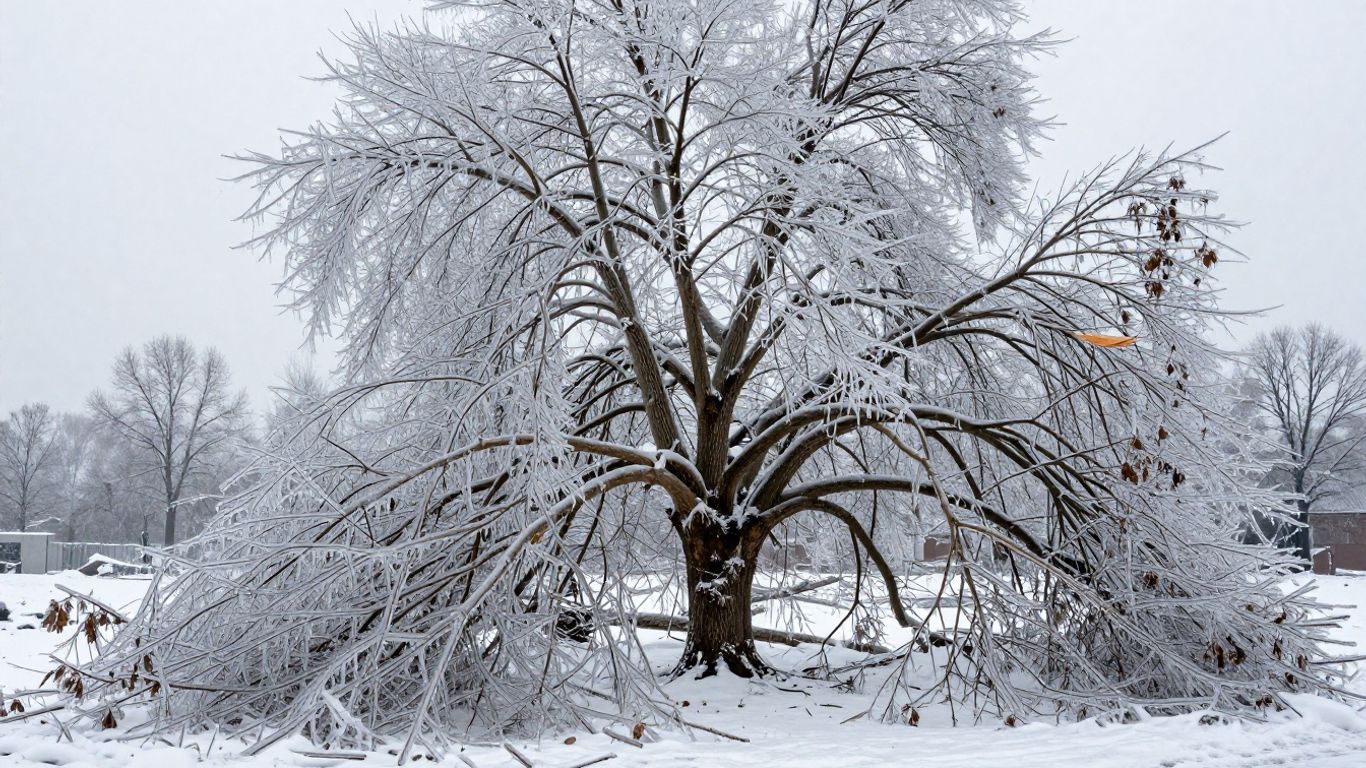
Ice storms can really do a number on trees. One minute they look fine, the next they’re covered in ice and looking pretty sad. Figuring out if your tree can bounce back or if it’s time to call it quits can be tough. We’ll break down how to tell the difference and what to do next.
How Ice Storms Actually Damage Trees
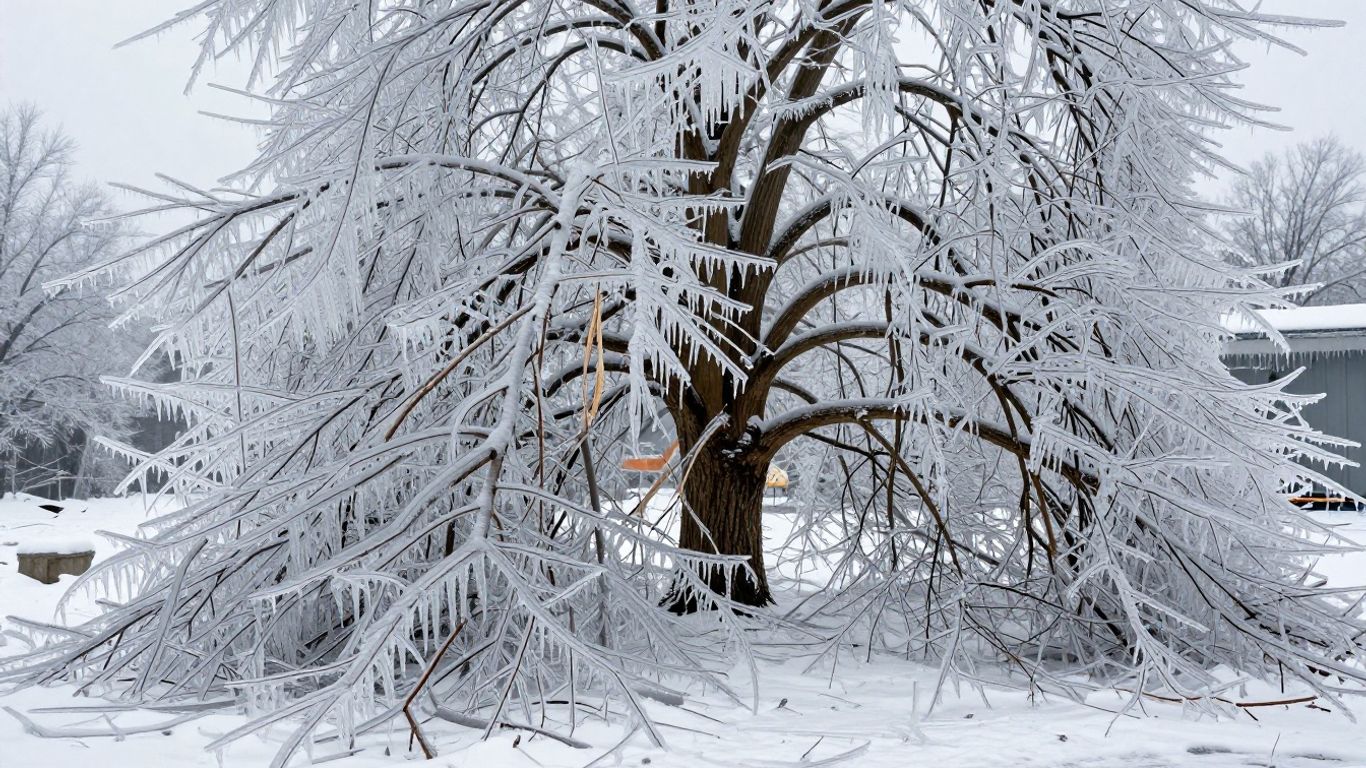
When an ice storm rolls through, it’s not just a pretty winter scene. That beautiful glaze of ice can actually do a lot of damage to our trees. It’s a slow, steady pressure that builds up, and it works differently than a strong wind storm.
The Weight of Ice Why Branches Split and Trunks Crack
Think about it: a thick coating of ice can add hundreds of pounds to a tree’s branches. This isn’t a quick snap like you might get from a gust of wind; it’s a constant, heavy load. This weight bends branches, sometimes to the breaking point. Trees with narrow, V-shaped crotches where branches meet the trunk are particularly vulnerable. These tight angles are weak spots, and the ice’s pressure can easily cause them to split right down the middle. It’s like trying to bend a wet paper towel eventually, it just gives way.
The real concern for long-term survival isn’t just the broken branches you see on the ground. It’s what happens inside the tree, beneath the bark, where decay can start to set in.
When a branch breaks or a trunk cracks, the tree’s internal wood is exposed. Healthy trees try to seal these wounds through a process called compartmentalization. But this takes energy, and that energy comes from the leaves. If a tree loses a significant portion of its canopy, it has less energy to fight off infection and repair itself. Studies show that trees losing more than three-quarters of their crown can experience major growth slowdowns for years afterward.
Which Tree Species Hold Up Best (and Worst) After an Ice Storm?
Not all trees are created equal when it comes to ice storms. Some species are just naturally more resilient than others. Generally, trees with strong, well-spaced branches and flexible wood tend to fare better. Hardwoods like oaks and maples, provided they have good structure, often show more resistance than softer-wooded trees.
Here’s a quick look at how different types might react:
- More Prone to Damage:
- Silver Maples: Known for brittle wood.
- Bradford Pears: Often have narrow V-shaped crotches that split easily.
- Some ornamental varieties: Can have weaker wood structures.
- Tend to Withstand Better:
- Oaks: Generally have strong branch structures.
- Hickories: Known for their tough, flexible wood.
- Eastern White Pines: Their needles are lighter than broad leaves, and branches are often more flexible.
It’s also important to remember that a tree’s overall health before the storm plays a huge role. A tree that was already stressed from drought, disease, or poor pruning is much more likely to suffer severe damage, regardless of its species. If you’re thinking about planting new trees or replacing damaged ones, considering local tree species for privacy that are known for their hardiness can be a smart move for the future.
Step One Is It Safe to Approach Your Tree?
Okay, so the ice storm has passed, and you’re looking out at your trees. Some look okay, others… not so much. Before you even think about getting close, the absolute first thing you need to do is figure out if it’s even safe to be outside near them. This isn’t just about avoiding a falling branch; it’s about spotting hidden dangers that could cause serious trouble.
Your immediate safety is the top priority, and that means a careful, ground-level assessment from a distance.
Here’s what to look for:
- Hanging Hazards: Keep an eye out for any branches that are cracked but still attached, or ones that are precariously balanced on other limbs. These are often called ‘widow-makers’ for a good reason they can fall without any warning, especially if there’s wind or more ice.
- Leaning Trees: Did a tree suddenly start leaning? Even if it hasn’t fallen over, a significant lean, especially towards your house or a public area, is a major red flag. The ground might be saturated, making the root system unstable. This kind of tree can topple days or even weeks after the storm.
- Power Line Issues: This is a big one. If any branches are touching or hanging over power lines, do NOT go near the tree. Assume the lines are live and extremely dangerous. Contacting your utility company immediately is the only safe course of action here.
Don’t underestimate the potential for delayed failure. A tree that looks mostly intact might have internal damage that will only become apparent later. The longer you wait to assess, the greater the risk.
Think of this initial check as a preliminary report. You’re looking for the obvious, serious problems. If you see anything that makes you uneasy, or if you’re unsure at all, it’s best to err on the side of caution and call in the professionals. Trying to assess severe damage yourself can put you in harm’s way, and honestly, you might miss critical signs that an experienced arborist would spot right away.
Have a dangerous hanging branch or leaning tree? Call us now +1 416-458-4745
Signs Your Ice Damaged Tree Can Be Saved
After an ice storm, it’s easy to look at your trees and feel a sense of dread. Branches are down, some trees look like they’ve been through a war. But before you call in the big equipment, take a closer look. Many trees are tougher than they appear and can bounce back with a little help and a lot of patience. The key is figuring out which ones have a fighting chance and which ones are sadly past the point of no return.
How Much of the Crown Is Still Intact?
The crown is basically the leafy part of the tree, and how much of it is left after the ice is a big clue to its survival chances. Think of it like the tree’s lungs it needs those leaves to make food.
- Minor to Moderate Crown Loss (Less than 50%): If only a few branches are gone or just some smaller twigs are broken, your tree is likely in good shape. It might look a bit messy, but it should recover well. This is the sweet spot for saving a tree.
- Significant Crown Loss (50% to 75%): This is where things get a bit tricky. A strong, healthy tree of a resilient species might still pull through, but it’ll take time, and it might not ever look quite the same. It’s worth getting a professional opinion here.
- Severe Crown Loss (More than 75%): For most trees, losing this much of the crown is a really bad sign. If the main branches are gone and the trunk itself is damaged, removal is often the best bet. However, some fast-growing trees can surprise you, so an arborist’s tree risk assessment is still a good idea.
Is the Trunk and Root System Undamaged?
While losing branches is obvious, damage to the trunk and roots can be more serious and harder to spot. A tree can lose a lot of branches but still be saved if its main support system is solid. Conversely, even minor-looking crown damage can be a death sentence if the trunk is compromised.
- Check the Trunk: Look for any vertical cracks, splits, or areas where the bark has been torn off, exposing the wood. Deep wounds or splits that go down towards the roots are particularly concerning.
- Inspect the Root Flare: This is where the trunk widens out at the base and meets the roots. Damage here, like splits or significant bark loss, can weaken the entire tree.
- Root System: While harder to see, if the ground around the tree has been heavily disturbed or if large roots are exposed and damaged, this can impact the tree’s ability to take up water and nutrients.
It’s important to remember that trees are living things, and they have an amazing ability to heal. Sometimes, branches that look completely broken will straighten out once the ice melts and the weight is gone. Don’t be too quick to make drastic cuts unless a branch is an immediate safety hazard. Patience is often your best tool after a storm.
Signs of Hope:
- Green Under the Bark: Use your fingernail to gently scratch a small area on a questionable branch. If you see green tissue underneath, the branch is likely alive and has a chance to recover.
- Buds Present: Even if branches are bent or look a bit sad, the presence of healthy-looking buds is a good sign that the tree is preparing to grow.
- Vigorous Species: Certain tree species are naturally more resilient and have a better chance of recovering from severe damage. If you have a strong hardwood like an oak or maple, it might be worth the effort to save it.
If your tree still has a good portion of its crown, a solid trunk, and a healthy root system, it’s a strong candidate for recovery. The next step is often professional tree pruning to help it along.
Signs Your Ice Damaged Tree Needs to Come Down
Sometimes, despite our best efforts, a tree just can’t bounce back after a nasty ice storm. It’s a tough call, but knowing when to let go is important for safety and preventing further damage.
Structural Damage That Can’t Be Fixed
If the main trunk of your tree has suffered serious damage, it’s often a sign that the tree’s days are numbered. We’re talking about cracks that go deep into the wood, or splits that run a significant length of the trunk. Even if the tree is still standing, these kinds of injuries compromise its core strength, making it unstable. Think of it like a major crack in the foundation of a house – it’s hard to trust it won’t collapse.
- Vertical cracks or splits extending more than a third of the way through the trunk.
- Missing sections of bark, especially if they expose a large area of the wood underneath.
- A significant lean that wasn’t there before the storm, particularly if the roots on one side look like they’ve been lifted or disturbed.
- Multiple large, main branches have snapped off, leaving the tree looking like a skeleton.
When the main support system of the tree is compromised, it’s usually not a matter of if it will fail, but when. Trying to save a tree with severe trunk damage can be a risky gamble.
When a Damaged Tree Becomes a Liability Risk
Beyond the structural integrity of the tree itself, you also have to consider the potential danger it poses to your property and people. If a damaged tree is leaning towards your house, garage, or even a frequently used pathway, it’s a ticking time bomb. The risk of it falling and causing significant damage or injury is just too high.
- Crown Loss: If more than 75% of the tree’s crown (the leafy part) is gone, it might not have enough energy reserves to recover, and what’s left might be unstable.
- Root System Damage: Signs like soil heaving around the base or exposed roots mean the tree’s anchor is weakened, making it prone to falling.
- Location: A tree with significant damage that’s situated over a driveway, deck, or near a home is a much higher risk than one standing alone in an open field.
It’s always better to be safe than sorry. If you have any doubts about the stability or safety of your ice-damaged tree, it’s best to get a professional opinion from an arborist.
Think your tree needs to come down? Get a Free Quote and we’ll assess it for you.
What Ice Storm Tree Repair Actually Involves
Dealing with ice damage after a storm isn’t just about grabbing a saw and lopping off every broken branch. There’s a right way and a wrong way to help your tree recover and keep your yard safe. Let’s break down what tree repair involves when the ice finally melts from those branches.
Emergency Pruning Removing Split and Hanging Branches Safely
After an ice storm, the first thing is to handle any branches that are hanging, cracked, or pressing against roofs, fences, or walkways. Here’s how the process usually goes:
- Identify Immediate Dangers: Hanging branches or those touching hydro lines should never be tackled without professionals. Anything high up or close to the house is asking for trouble if DIY’d.
- Proper Pruning Technique: When it’s safe, cut back broken limbs just outside the branch collar (that slightly swollen bit where branch meets trunk). Avoid leaving jagged stubs, which invite rot.
- Don’t Over-prune: Some branches may look rough but could bounce back come spring. Only remove the truly dead or split wood now. Over-pruning can make the tree weaker in the short term.
When in doubt, patience beats panic. Removing too much too soon can set a tree back for years, or worse cause it to fail outright.
Cabling and Bracing for Structurally Weakened Trees
Sometimes, a tree doesn’t need to come down, but it does need some extra help staying upright. Here’s what’s involved in giving support:
- Cabling: High-strength steel cables are installed higher up in the canopy to reduce the risk of splits spreading and major limbs tearing away. This is especially handy for mature maples and oaks that lost one side of their crown.
- Bracing: For splits closer to the trunk, rigid rods are used to physically bolt a weak joint together. Not a DIY project one slip and you could do permanent harm.
- Monitoring: After installing cables or braces, keep a close eye for movement, signs of new splitting, or rotting near the fasteners. Nothing lasts forever; regular inspections by an arborist are a must.
Here’s a simple table showing when tree cabling and bracing treatments make sense:
| Situation |
Emergency Pruning |
Cabling/Bracing |
Removal |
|---|---|---|---|
|
Hanging, broken limbs (minor) |
Yes |
No |
No |
|
Major branch crack (not split) |
Maybe |
Yes |
Sometimes |
|
Trunk split/major structural fail |
No |
No |
Yes |
Taking time to fix the right problems now can give your tree the best chance to recover for the long haul. These repairs aren’t just a safety thing they can decide whether your favourite tree makes it through another winter, or not.
When to Call an Arborist vs Handle It Yourself
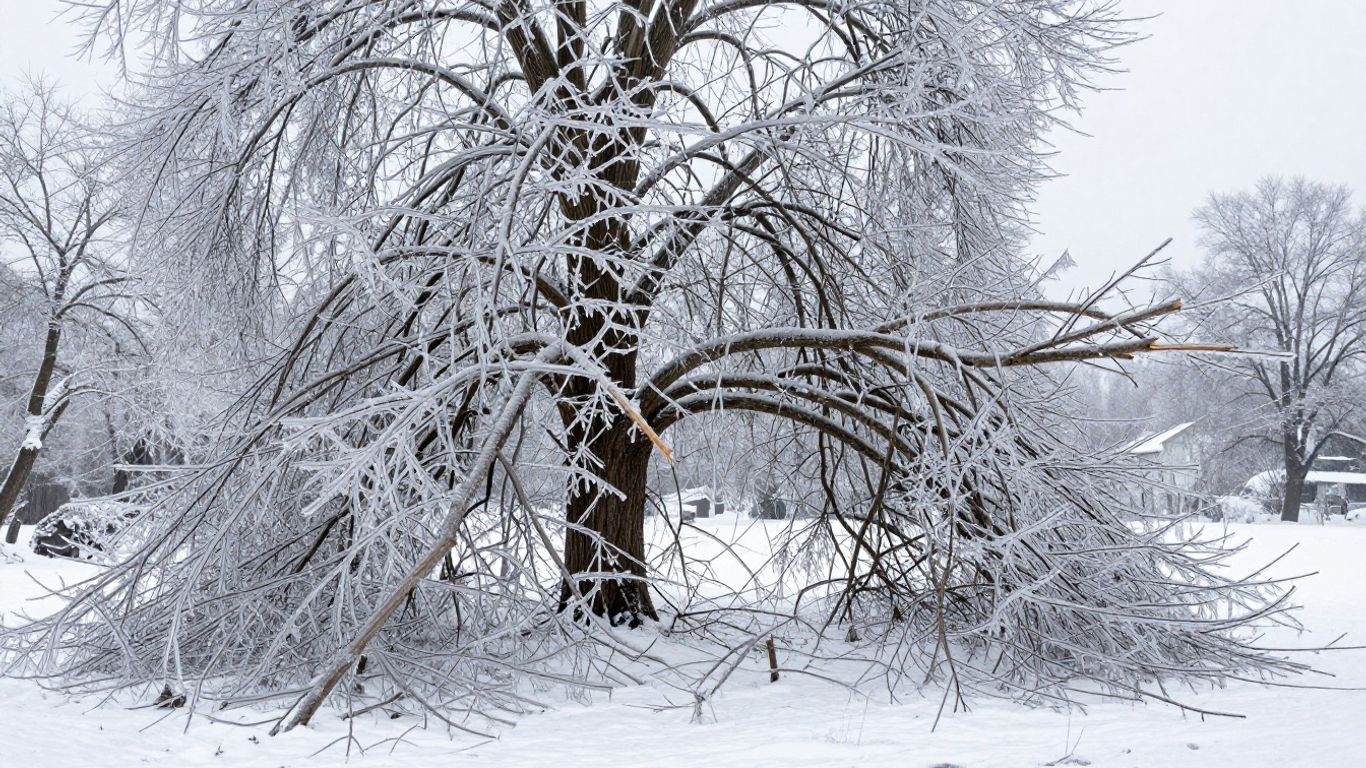
Okay, so you’ve got a tree that looks like it went a few rounds with a heavyweight boxer. Branches are down, maybe some are hanging precariously. The big question is: can you tackle this yourself, or is it time to call in the pros? Honestly, for most of us, the answer leans heavily towards calling a professional.
Think about it. You’ve got ice, maybe snow, still clinging to everything, making branches heavy and unpredictable. The ground might be slick. Plus, you might not see the subtle cracks or stress points that a trained eye would spot immediately. Trying to cut a heavy, ice-laden branch that’s under tension is a recipe for disaster, plain and simple. It could snap unexpectedly, sending you or your property flying.
Here’s a quick rundown of when it’s definitely a job for an arborist:
- Significant Damage: If large branches are down, the trunk is cracked, or the tree is leaning at a worrying angle, call a pro. These situations are dangerous and require specialized equipment and emergency tree services knowledge.
- Height and Reach: If the damage is high up in the tree, or branches are near power lines or your house, don’t even think about it. Arborists have the gear and training to work safely at heights and around hazards.
- Uncertainty: If you’re not 100% sure about what you’re doing, or if you have any doubts about safety, it’s always better to be safe than sorry. A quick consultation can save you a lot of trouble (and potentially a trip to the hospital).
Sure, if it’s just a small twig that fell off and landed harmlessly on the lawn, you can probably grab your garden gloves and sweep it up. But anything more substantial? That’s when you want someone who knows trees inside and out.
Dealing with storm damage yourself can seem like a way to save money, but the risks involved often outweigh any potential savings. Professionals have the right insurance, so if something goes wrong on their watch, you’re generally covered. Plus, they have the heavy duty equipment, like chippers and cranes, that most homeowners simply don’t have access to. This means they can get the job done faster and more efficiently, letting you focus on other pressing matters like insurance claims or repairs to your home.
How Heritage Tree Care Handles Ice Storm Damage in Toronto
When ice storms hit Toronto, it’s not just about clearing the mess it’s about making sure any work done is smart and safe, and actually gives the tree a real chance to survive. Heritage Tree Care Inc. approaches every ice-damaged tree knowing that each one tells a different story.
Here’s our step-by-step process:
- Safety First: Before anything else, the crew always checks for hanging limbs, tangled power lines, or anything else that could be dangerous nobody touches a tree until it’s safe.
- On-Site Assessment: We meet you at your property and look at each damaged tree closely. Our team checks for two major things: how much of the crown is still there, and whether the trunk or root system has any hidden cracks, splits, or rot.
- Prioritizing Trees: Not every tree can (or should) be saved. If a tree’s lost over three-quarters of its branches, or the trunk is badly split, tree removal might be the safest move. But if at least half the canopy is intact and the main structure is solid, we focus on repair.
- Selective Pruning: We cut back only what truly needs to go removing split, hanging, or snapped branches, and never topping trees (that just causes more problems down the line).
- Structural Supports: For big trees that have lost some support but are still standing, we’ll use cables and braces to hold them together while they recover.
We keep track of all repairs so we can monitor your trees for hidden decay or long-term structural trouble. And if a tree does need to come down, we’ll walk you through the best replanting options for a hardier, storm-tough replacement next time around.
Not sure if your tree can be saved? Our certified arborists will assess the damage and give you a straight answer. Book a Free Consultation or call us at +1 416-458-4745
Making the Call: Repair or Remove?
So, after all is said and done, deciding whether to try and save a tree or just let it go can be tough. It’s not just about looks; it’s about safety and what makes sense for your property long-term. Remember, a healthy, well-maintained tree is your best bet against future ice storms. If you’re unsure, don’t guess. Getting a professional arborist to take a look is usually the smartest move. They can tell you if your tree has a fighting chance or if it’s time to consider tree removal before it becomes a bigger problem. Thinking ahead and taking care of your trees now can save you a lot of headaches down the road.
Frequently Asked Questions
How much ice can a tree actually hold?
A lot! A thick layer of ice can add hundreds of pounds to a tree’s branches. Imagine carrying that much extra weight it’s no wonder branches split and trunks crack under the strain.
What’s the ‘scratch test’ for checking if a branch is alive?
It’s a simple trick! Gently scratch a bit of bark off a questionable branch with your fingernail. If you see green underneath, the branch is alive and well. If it’s brown and dry, that part of the branch is likely dead.
Is it ever okay to cut off all the branches of a damaged tree?
Generally, no. Cutting off all the branches, called ‘topping,’ is very harmful. A tree needs its leaves to make food, especially when it’s recovering. If a tree is that badly damaged, it’s usually better to remove it and plant a new one.
When should I definitely call a professional arborist?
If there’s any doubt about safety, height, or structural damage, call a certified arborist. See the full breakdown above.
Can a tree that looks really bad after an ice storm still recover?
Often, yes! Trees are surprisingly tough. If the main trunk and root system are okay, and not too much of the crown (the leafy top part) is gone, a tree can often bounce back with some careful pruning and time. Patience is key!
What’s the difference between a tree that needs pruning and one that needs to be removed?
Pruning is for fixing smaller issues like removing broken branches or shaping the tree. Removal is necessary when the tree has major structural problems, like a split trunk, more than half its major branches gone, or if it’s become a safety hazard that can’t be fixed.
Serving the Greater Toronto Area