
By Joseph Gillingham, Heritage Tree Care Inc. | Updated September 2026
Key Takeaways
Learning how to identify tree species starts with observing several features together rather than relying on one leaf or a phone photograph.
- Compare leaves, bark, buds, fruit, and overall form.
- Learn the visible differences between common Ontario deciduous and coniferous trees.
- Use seasonal clues carefully, since appearance changes throughout the year.
- Confirm uncertain identifications before pruning, planting, removing, or treating a tree.
- Ask a certified arborist to assess trees that are large, damaged, protected, or near property targets.
Why Homeowners Ask “How Do I Identify a Tree?” (And Why It Matters)
You may want to identify a tree because you are planning a garden, noticing unusual damage, or deciding whether a plant will suit a particular part of your yard. Sometimes the question is simply curiosity: how do I identify a tree that has been growing beside the driveway for years? The answer becomes more useful when you connect the name of the tree with its mature size, growth habits, health concerns, and tolerance for local conditions – which is exactly what our arborist consulting team reviews during a site visit.
Correct identification can change the care advice you receive. A pruning approach that suits one species may be poorly timed for another, while a tree that looks unhealthy in autumn may simply be entering normal dormancy. Knowing the species also helps you choose suitable planting locations and understand whether a tree may be covered by municipal rules.
The phrase how to identify tree species sounds like a simple search, but reliable identification is usually a process of comparison. You look at more than one characteristic, record what you see, and avoid treating a first guess as a diagnosis. For useful vocabulary about trunks, limbs, canopies, roots, deciduous trees, and conifers, our plain-language guide to tree terminology can help.
The 4 Features Arborists Check First to Identify Tree Types
Arborists rarely identify a tree from a single clue. They consider leaves, bark, buds, fruit or cones, branching pattern, and the tree’s overall shape, then compare those observations with the site and season. The four broad features below give you a practical starting point, while a full assessment may require closer inspection.
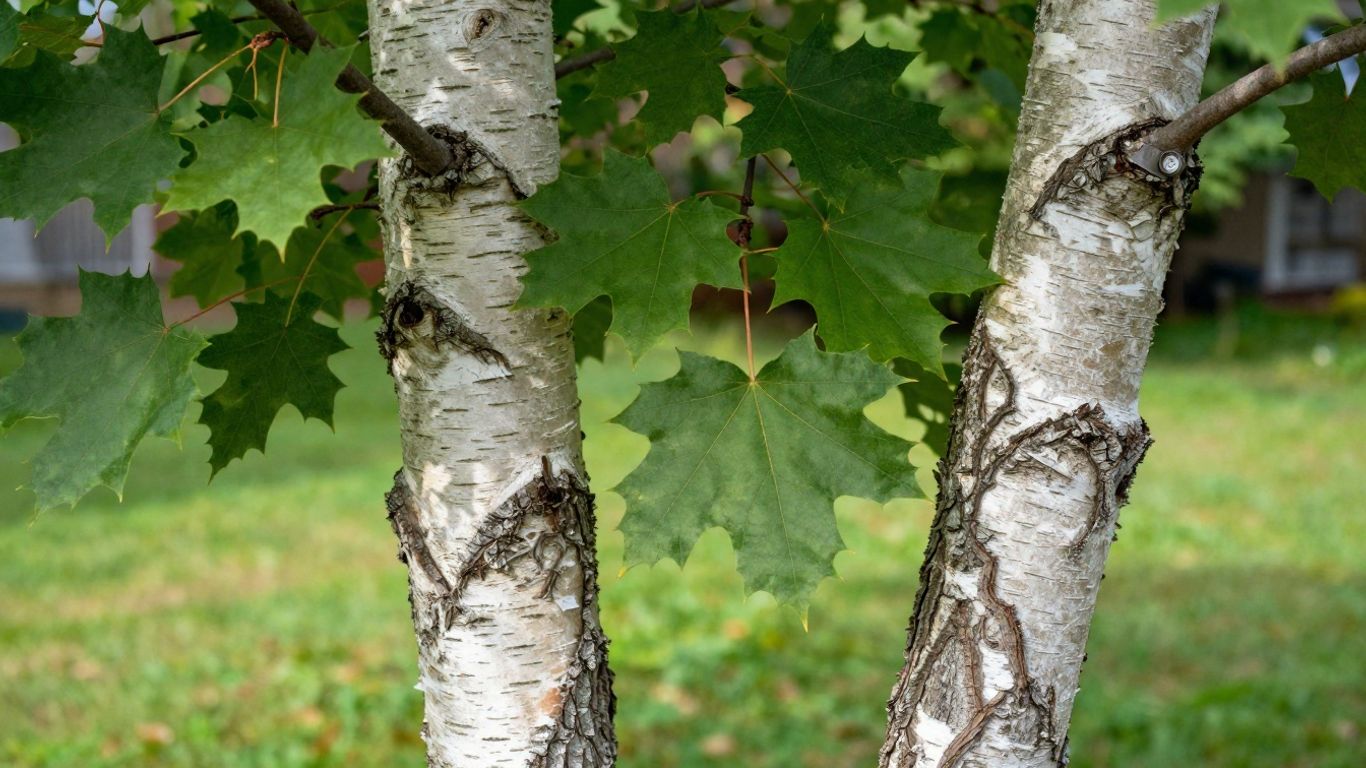
A useful field note includes the date, location, a photograph of the whole tree, and close views of a leaf, twig, and bark. Several clues together are much more dependable than a single visual match.
Leaf Shape, Arrangement, and Margin: Your Fastest Clue
Leaves are often the quickest way to narrow down a tree type, especially during the growing season. Look at whether leaves are simple or divided, whether they grow opposite or alternately along a twig, and whether the edge is smooth, toothed, or lobed. Leaf size and colour help, but they can vary with sunlight, drought, age, and disease.
Take a close photograph that shows the leaf attached to its twig rather than a loose leaf on the ground. The arrangement matters: opposite leaves can point you toward a different group than alternate leaves, while lobes and deep sinuses can help separate several maple and oak species. A regional illustrated guide such as these tree identification resources can help you compare observations without treating an image match as final proof.
Bark Texture and Colour: What It Reveals About Age and Species
Bark becomes especially valuable when leaves have fallen. Examine whether it is smooth, flaky, ridged, plated, furrowed, or papery, and note its colour without relying on a flash photograph. Young trees can have noticeably different bark from mature trees, and weather, injury, moss, and lichen can alter what you see.
Bark should support an identification, not replace it. Combine the trunk’s appearance with twig arrangement, buds, remaining fruit, and the tree’s silhouette. If you are unsure, keep your description broad – such as maple-like or birch-like – until more evidence becomes available.
Common Deciduous Trees on Toronto and GTA Properties
Deciduous trees lose their leaves during part of the year, making their seasonal appearance very different from that of evergreens. Across Toronto, Etobicoke, and the wider GTA, you may encounter maples, oaks, birches, ash relatives, poplars, and ornamental species in streetscapes and backyards. Soil, exposure, pruning history, and age can make the same species look surprisingly different from one property to the next – our crews see this regularly on properties across North York.
The safest approach is to compare several specimens when you can. A single stressed tree may have undersized leaves or an uneven canopy, so a healthy nearby example can provide a useful reference.
Maple, Oak, and Birch: The Three You’ll See Most Often
Maples commonly have opposite leaves, with forms ranging from deeply lobed to more finely divided. Oaks usually have alternate leaves with lobes or bristle-tipped edges, and many produce acorns. Birches often show distinctive bark, but the colour and texture can vary between species and with age; their twigs, leaf shape, and catkins provide additional clues.
| Tree group | Clue to examine | Common source of confusion | Helpful confirmation |
|---|---|---|---|
| Maple | Opposite, often lobed leaves | Different maple species vary widely | Check samaras, buds, and mature bark |
| Oak | Alternate lobed leaves | Leaf shapes differ between red and white oak groups | Look for acorns and twig features |
| Birch | Toothed leaves and characteristic bark | Young bark may look unlike mature bark | Check catkins, twigs, and bark together |
This comparison is a starting point, not a field diagnosis. If you are choosing a new tree, also consider mature height, root space, moisture, and overhead wires; a visually attractive species may still be a poor fit for a tight urban site. For more detail on local oak choices and care, see this guide to Toronto oak trees.
Common Coniferous and Evergreen Trees in Ontario Yards
Conifers and other evergreens retain foliage through much of the year, although they still shed older needles or scales. Their year-round colour makes them popular for privacy screens, wind protection, and structure in small gardens. Identification depends heavily on the type of foliage, the way it attaches to a twig, cones or fruit, and the shape of the branches.
Do not assume every evergreen is a conifer, and do not identify a tree by colour alone. Winter burn, drought, salt exposure, and shade can make healthy foliage look pale or thin.
Cedar, Pine, and Spruce: Quick Differences to Look For
Cedar foliage is typically arranged in soft, flattened sprays of scale-like leaves. Pines have needles gathered in bundles, with the number of needles per bundle helping narrow the identification. Spruces have single, stiff needles attached around the twig and often feel sharper than fir needles.
The cones can help, but fallen cones may have come from another nearby tree. Check the living branch, needle or scale attachment, bark, and overall form before deciding. A compact evergreen may be a cultivated variety rather than a separate species, which is another reason to record the tree’s setting and approximate age.
Seasonal Clues: How Tree Identification Changes From Spring to Winter
Spring is an excellent time to observe buds, catkins, flowers, and fresh leaf arrangement. Bud shape and scale pattern can separate species that look similar once their leaves are fully open. Early spring also makes branch structure easier to see before the canopy becomes dense.
Summer gives you the clearest view of leaf shape, colour, margins, and the tree’s full crown. Look for fruit, samaras, acorns, cones, or signs of insect activity, but remember that drought and disease can distort normal appearance. A leaf with spots may tell you more about stress than species if you view it in isolation.
Autumn colour can be helpful but is not definitive, since temperature, soil moisture, and sunlight affect how leaves change. In winter, focus on bark, buds, twigs, branching, persistent fruit, and evergreen foliage. Photographing the same tree in several seasons often gives you a much stronger identification record than one perfect-looking image.
Native vs. Invasive Species: Why the Distinction Matters in Ontario
Native and introduced trees can both be valuable parts of an urban landscape, but the distinction matters when you are planning habitat, selecting replacements, or managing natural areas. A species that grows quickly may not always be the best choice for biodiversity or long-term maintenance. Identification helps you understand what role a tree may play before you remove it or add more of the same kind – something our tree planting and species selection service can help you plan for.
You should also avoid assuming that every unfamiliar plant is invasive. Confirm the identification with a reliable regional source, especially when a tree is young or has been cultivated in an unusual form. Look at the whole plant and its growth pattern rather than reacting to one vigorous shoot or an unfamiliar leaf.
The practical question is not simply whether a tree is native. You also need to consider site conditions, mature size, wildlife value, disease susceptibility, and whether the planting could spread into nearby natural areas. If a tree is in a ravine, near a protected area, or part of a larger development plan, professional advice before any removal work begins can prevent an expensive mistake.
A Real Example From Our Site Visits: Misidentifying a Tree Before It Was Too Late
On a typical residential visit, a homeowner may describe a tree as a maple because of its broad leaves and familiar crown. That first description can be understandable and still incomplete. A closer review of the twigs, bark, branching structure, and site history may point to another species or reveal that the real concern is not identification but structural weakness.
At Heritage Tree Care Inc., a certified arborist team serving the GTA, site assessments are used to consider tree health, safety, and management needs rather than relying on a name alone. In one common type of situation, a tree that looks generally healthy from the patio may have included deadwood, a weak union, or damage that is easier to spot from below the canopy and around the trunk. The lesson is not that homeowners should never make an initial identification; it is that an initial identification should lead to better questions.
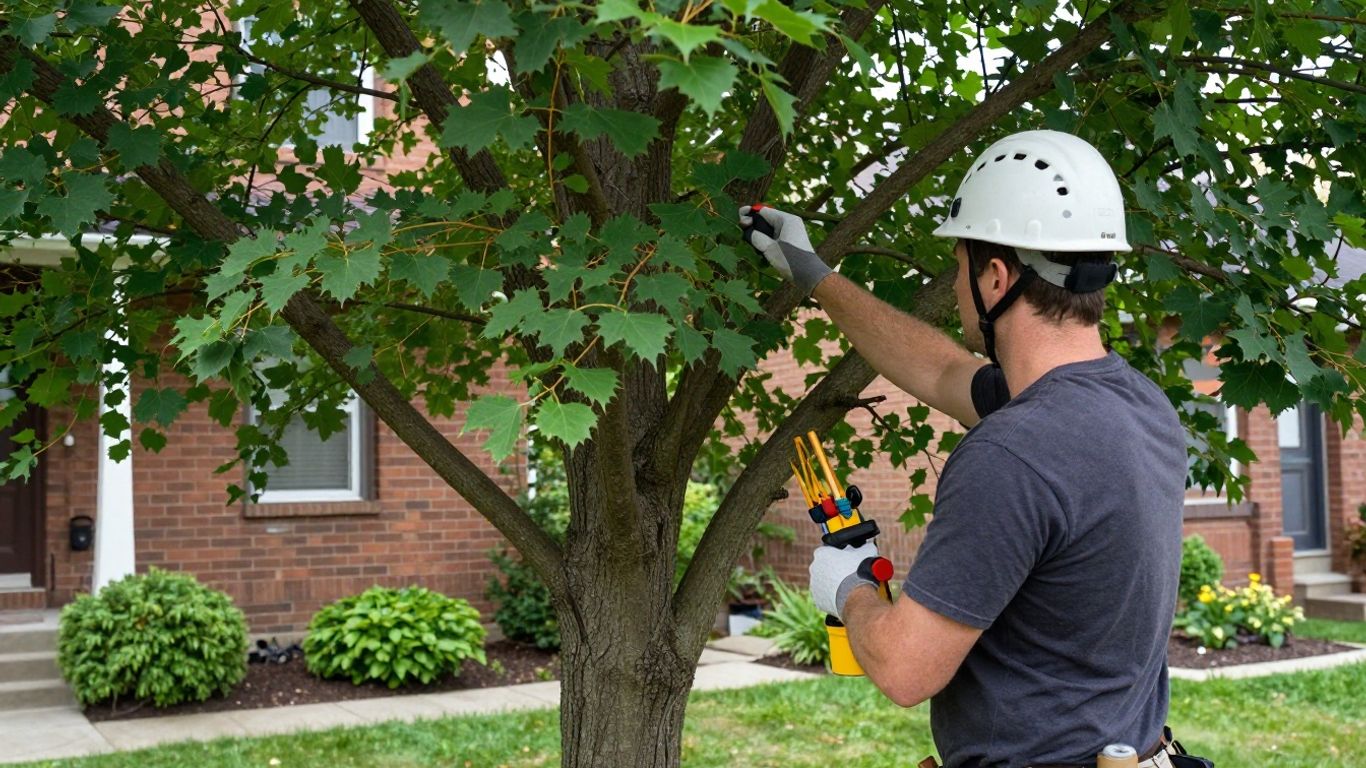
If you notice a sudden lean, cracking, hanging branch, fungal growth at the base, or a rapidly thinning crown, step back and keep people away from the area until the risk is assessed. Species information can guide the review, but it does not make a hazardous tree safe. In these cases, the right next step is a site assessment rather than a more confident guess from a photograph.
Common Mistakes Homeowners Make When Identifying Tree Species
Many identification errors happen because the observer stops after finding one familiar feature. A lobed leaf may suggest maple or oak, but leaf arrangement, bark, fruit, and twig details can tell a different story. Another common problem is comparing a healthy reference image with a stressed tree that has been exposed to salt, drought, shade, or construction damage.
When you are working through how to identify tree species, slow down and record what you actually see. Avoid filling gaps with assumptions about where the tree was purchased or how old it appears.
A short checklist can keep the process grounded:
- Photograph the entire tree and its surrounding site.
- Capture a leaf or needle attached to a twig.
- Check bark, buds, fruit, cones, and branching pattern.
- Compare at least two or three independent features.
That record makes it easier to revisit the identification in another season or explain the uncertainty to an arborist. It also separates a species question from a health question, which are related but not interchangeable.
Tools and Apps vs. a Trained Eye: What Each Gets Wrong
Identification apps can be useful for generating possibilities, especially when you provide clear photographs from several angles. They may struggle with cultivars, hybrids, damaged leaves, poor lighting, and species that look alike. A result that appears highly confident is still only as good as the photograph and the reference data behind it.
A trained eye adds context that an image may miss: the tree’s location, exposure, soil conditions, age, structure, and signs of decline. Online resources such as this collection of tree identification tools can support your research, but they should not be treated as a substitute for a site assessment when safety or treatment is involved.
Use technology as a way to organize observations, not as permission to act immediately. Confirm the result with a regional field guide, a second source, or a qualified professional, particularly if you are considering major pruning, removal, or planting near infrastructure. The more serious the decision, the less useful a single image becomes.
Why Correct Identification Affects Pruning, Planting, and Permits
Species affects when a tree grows, flowers, sets seed, responds to pruning, and reacts to environmental stress. It also influences the amount of space needed for roots and branches. If you identify a tree incorrectly, you may choose a planting location that becomes unsuitable as the canopy expands, or schedule pruning at the wrong time for that species, increasing stress or disease risk.
Identification can also be part of a permit or planning conversation. In Toronto, tree work may be subject to rules based on tree size, location, and the type of work proposed. Before removing or significantly altering a tree, review what Toronto’s tree removal permit process actually requires and confirm what documents or professional input may be needed.
A species name does not by itself determine whether work is allowed. Municipal requirements, property conditions, protected areas, and the full range of tree work involved all matter. Treat identification as one piece of a wider decision that includes risk, regulations, timing, and the tree’s value to the site.
When to Call a Certified Arborist Instead of Guessing
You can often make a reasonable preliminary identification from the ground, but some situations call for professional help. Large trees, damaged trunks, elevated branches, trees close to homes, and signs of root failure are not good candidates for trial-and-error care. Distance also matters: a small leaf detail that seems clear from a photograph may be impossible to verify safely in the canopy.
Call a certified arborist when you see a new lean, major cracks, hanging limbs, extensive dieback, mushrooms near the base, storm damage, or a tree that may be protected by local rules. You should also seek advice before removing a mature tree or planting a large species in a confined space. A professional risk assessment that looks at both species and structural condition can address both identification and the condition that prompted your concern.
Prepare photographs, the property’s location, recent changes such as excavation or construction, and a short description of what you have noticed. Good information helps the professional focus the visit, but it does not replace an on-site review. When uncertainty involves people, buildings, vehicles, or utility lines, caution is the sensible choice.
Get Your Trees Identified and Assessed by Heritage Tree Care Inc.
Heritage Tree Care Inc. provides arborist consulting in Toronto and the GTA, including tree risk assessments, strategic tree planting and selection, tree preservation plans, and tree inventory services. Those services can help connect a tree’s identity with its health, location, and management needs rather than leaving you with a name and no practical next step.
For a mature, uncertain, or potentially hazardous tree, an assessment can clarify what you are seeing and what should happen next. The arborist consulting service includes work related to identifying and managing tree hazards, selecting trees for site conditions, and documenting trees for planning and compliance. That broader view is especially useful when a tree sits near a home, construction area, or property boundary.
If you are ready to move from a preliminary guess to a useful plan, call Joseph Gillingham and the Heritage Tree Care Inc. team at 416-458-4745, or get in touch with our team through our contact page with photographs and your main concern. A careful identification can support safer pruning, better planting decisions, and more informed conversations about permits and long-term care.
Conclusion
Learning how to identify tree species is less about memorizing every leaf and more about observing several details with patience. Use seasonal clues, compare bark and foliage, verify uncertain results, and bring in a certified arborist when the tree’s safety, health, or legal status is at stake.
Frequently Asked Questions
How do I identify a tree without leaves?
Examine the bark, buds, twigs, branching pattern, overall shape, and any persistent fruit or cones. Comparing several features is more reliable than using bark colour alone.
What is the quickest way to identify tree types?
Start with the leaves or needles when they are available, then check how they attach to the twig and whether the edges are smooth, toothed, or lobed. Confirm the first impression with bark, buds, fruit, or cones.
Can a tree identification app identify a species accurately?
An app can suggest likely species, but results vary with image quality, season, hybrids, cultivars, and similar-looking trees. Use the result as a starting point and confirm it with additional evidence.
Are maple and oak leaves easy to tell apart?
Often, but not always. Maples commonly have opposite leaves, while oaks generally have alternate leaves; leaf lobes, bark, acorns, buds, and twig features provide further confirmation.
How can I tell a cedar, pine, and spruce apart?
Cedars usually have scale-like foliage in flattened sprays, pines have needles in bundles, and spruces have single stiff needles attached around the twig. Cones and overall form can help confirm the distinction.
Does tree identification affect pruning?
Yes. Species can influence growth patterns, pruning timing, disease risk, and how the tree responds to stress. Correct identification should be combined with an assessment of structure and health.
When should I ask an arborist to identify a tree?
Ask for professional help when the tree is large, damaged, leaning, near a structure, difficult to access, or involved in planned removal or construction. You should also seek advice when municipal permissions may apply.
Serving the Greater Toronto Area