
No two tree removals in Toronto cost the same. A small ornamental tree in an open front yard can be taken down quickly by a small crew. A mature maple or oak hanging over a roof may need climbers, rigging, a crane and a full day of work. That’s why a photo or phone call alone rarely gives an exact price, and why it pays to understand what goes into a quote before you book.
This guide breaks down what drives the price, what the City of Toronto charges for permits, which extra costs to plan for, and how to estimate tree removal cost before booking an arborist. When it’s time for a firm number, professional tree removal services in Toronto start with an on-site look at the tree, the yard and everything around it.
How Much Does Tree Removal Cost in Toronto?
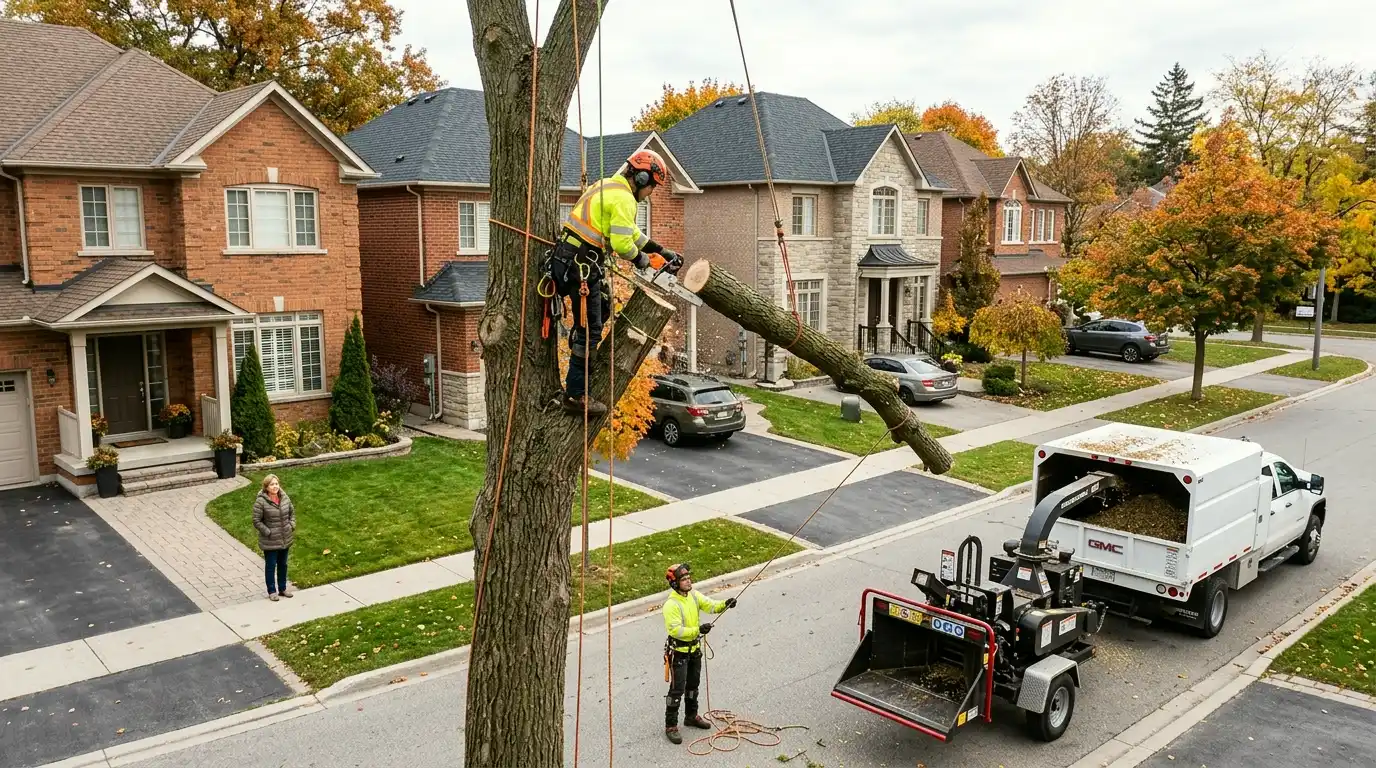
Price depends far more on how hard the tree is to take down safely than on the tree itself. Two 15-metre trees can be priced very differently. One in an open yard can be felled in sections onto the lawn. The other, wedged between a garage, a fence and hydro lines, has to be climbed and lowered piece by piece on ropes.
How Tree Size Changes the Price
Arborists usually group trees into rough size classes when planning a job:
- Small trees (under about 9 m / 30 ft): young crabapples, small cedars or a dead fruit tree with clear access. These are usually the quickest and simplest removals.
- Medium trees (about 9 to 18 m / 30 to 60 ft): most Norway maples, ashes and spruces on city lots. These often need climbing and sectional cutting.
- Large trees (over 18 m / 60 ft): mature silver maples, oaks and tall pines with wide canopies. These generally need a full climbing crew, rigging and more time.
- Complex or crane removals: trees that lean over a house, sit in a tight backyard with no laneway access, or need a crane to lift sections over the roof. These are the most involved jobs.
Each step up in size adds crew time, equipment and disposal work, and that’s what moves the price.
What a Tree Removal Estimate Usually Includes
A complete estimate should spell out exactly what the price covers. In most cases that’s felling or dismantling the tree, chipping the branches, cutting the trunk into manageable rounds and hauling debris away. It should also state whether the stump is ground, whether the wood stays on site, and whether a permit application or arborist report is part of the job. If an estimate is one line with a single number, ask for the breakdown before you sign.
Key Factors That Affect Your Tree Removal Cost
Every tree removal estimate in Toronto comes down to the same handful of variables. Knowing them helps you understand why quotes differ and where costs can be reduced.
Tree Height, Trunk Diameter and Species
Height sets how much climbing and rigging the job needs, while trunk diameter determines the weight of each section that has to be lowered. A silver maple with a 90 cm trunk produces several tonnes of wood, which means more crew hours, more chipping and more hauling. Species matters too. Dense hardwoods like oak are heavier to handle than softwoods, and brittle species such as silver maple and Manitoba maple need more care when limbs are already weak.
Location, Access and Nearby Structures or Power Lines
Access is often the biggest cost driver on Toronto properties. Narrow side yards, backyards with no laneway, fences, sheds, pools and garden beds all slow the work, because every branch must be carried out by hand or lowered precisely. Trees growing near overhead wires add another layer of risk. Some work near live lines can only be done by line-clearance qualified crews or after the utility is involved.
Dead, Diseased or Storm-Damaged Trees
Dead and decayed trees aren’t always cheaper to remove. Dry, brittle wood can snap unpredictably, so climbers often can’t tie into the tree and may need a bucket truck or crane instead. Trees weakened by disease, such as oaks affected by oak wilt, also need careful handling to avoid spreading the problem. When it’s unclear whether a tree can be saved, a professional tree risk assessment is the right first step and can save paying for a removal that wasn’t needed.
Toronto Tree Permits and Bylaw Costs to Budget For
In Toronto, a permit is required to remove or injure any private tree with a trunk diameter of 30 cm or more, measured 1.4 m above the ground. Every City-owned street tree is protected regardless of size. Any tree inside an area covered by the Ravine and Natural Feature Protection By-law needs a permit as well.
The City’s 2026 application form lists these fees per tree for non-construction removals: $145.87 for a private tree and $304.51 for a boundary or neighbour tree. Construction-related applications cost more, at $436.39 per private tree. If a permit is approved, the City may require a replacement tree, or a cash-in-lieu payment of $583 per tree where there isn’t enough space to replant. For a step-by-step walkthrough of the paperwork, see the City of Toronto tree removal permit process before any work starts.
Trees that straddle a property line need consent from both owners. For City-owned street trees, contact 311 rather than hiring a private company.
Extra Costs: Stump Grinding, Wood Hauling and Cleanup
The stump is the most common surprise on a final invoice. Many tree removal quotes cut the tree close to the ground and leave the stump unless grinding is listed. Stump grinding is usually priced separately, and large or multiple stumps take longer to grind. Ask whether stump grinding and removal in Toronto is included, how deep the grinder goes, and whether the grindings are hauled away or left to fill the hole.
Other line items to look for include hauling away large trunk rounds, splitting wood for firewood, raking and final cleanup, and lawn repair where equipment crossed the grass.
Emergency Tree Removal vs. Planned Removal Pricing
A storm-damaged tree resting on a roof or blocking a driveway costs more to remove than the same tree booked a few weeks ahead. Emergency work often happens after hours, in poor weather and with the tree under load, with branches under tension that can spring back when cut. Crews may also need to tarp, stabilize or cut the tree in a specific order to keep damage from getting worse.
If a tree has already come down, emergency tree removal services in Toronto can respond and secure the site. Removing clearly declining trees before they fail keeps costs lower and avoids emergency rates.
How to Estimate Your Tree Removal Cost Before Calling an Arborist
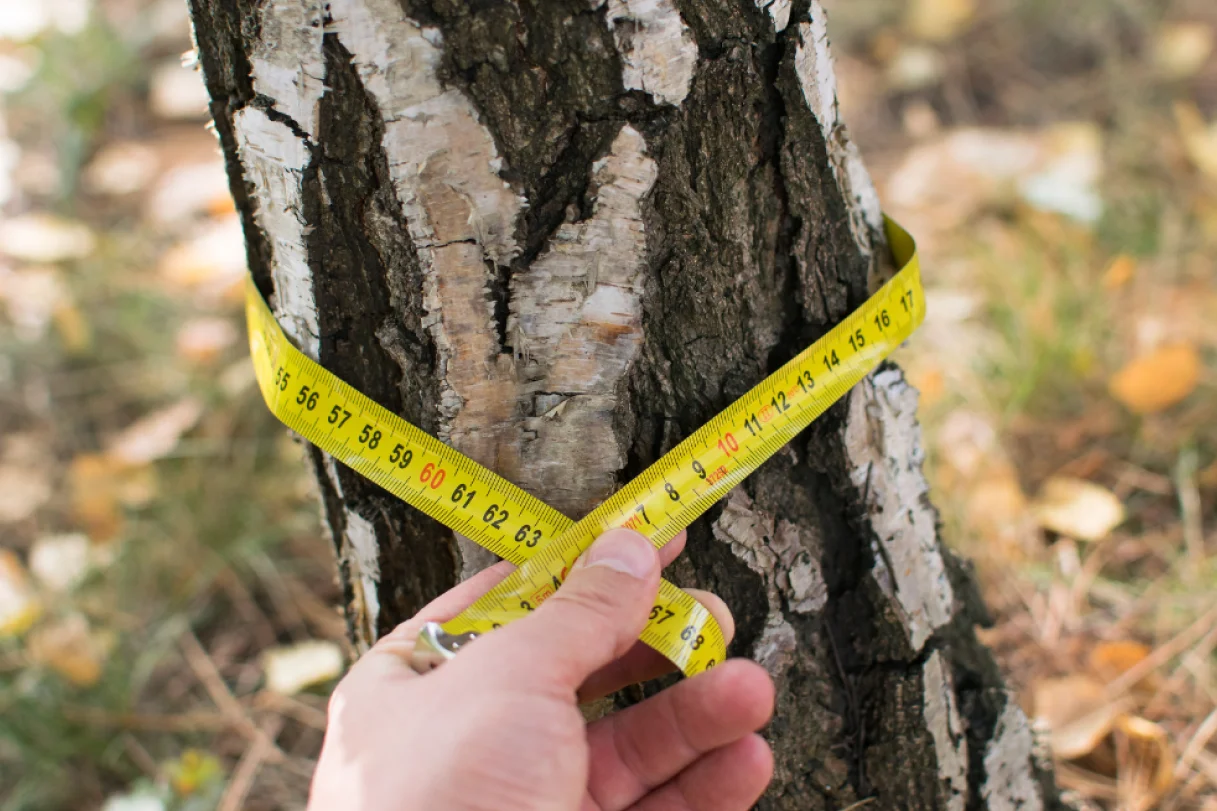
Doing a little homework makes it easier to compare quotes. Start by measuring the trunk circumference 1.4 m above the ground and dividing by 3.14 to get the diameter. If it’s 30 cm or more, a permit is likely needed, so add the City fee to your budget. Next, estimate the height by comparing it to the house: a two-storey home is roughly 8 to 9 m tall.
Then look at access. Can a truck or chipper get within 30 m of the tree? Is anything underneath the canopy, such as a roof, deck, fence or wires? Each “yes” points to a more involved job and a higher estimate. Finally, decide whether you want the stump ground and the wood removed, since both change the total.
Questions to Ask Before Accepting a Tree Removal Quote
Ask whether the company carries liability insurance and WSIB coverage, and whether the crew includes ISA Certified Arborists. Confirm in writing whether the price includes stump grinding, debris removal and permit help. Ask how the tree will be taken down (felling, climbing and rigging, or crane), because that tells you whether the quote matches the real level of risk. A much lower quote often leaves out cleanup, insurance or the stump.
Tree Removal or Pruning? When a Lower-Cost Option Makes Sense
Not every problem tree has to come down. A tree with one dead limb, a branch rubbing the roof, or a canopy blocking light can often be kept with professional pruning, which usually costs less than a full removal. A tree with a weak fork or a heavy leader can sometimes be kept safe with cabling and bracing. Pruning often needs no permit, as long as the work doesn’t injure a protected tree.
Removal makes more sense when the trunk has major decay, the root plate is lifting, more than half of the canopy is dead, or the tree is damaging a foundation. An arborist can tell the difference on site.
Get an Accurate Tree Removal Estimate from Heritage Tree Care
The most accurate way to estimate tree removal cost is an on-site visit. Heritage Tree Care arborists look at the tree’s size, condition and access, check whether a permit is needed, and provide a written estimate that lists exactly what’s included. The team works across Toronto, North York, Etobicoke and Mississauga.
To book an assessment, request your tree removal estimate online or call 416-458-4745 to speak with the team.
Frequently Asked Questions About Tree Removal Costs in Toronto
What makes a large tree more expensive to remove in Toronto?
Large trees take more climbing, rigging, crew time and disposal work, and costs rise further when access is tight, the tree hangs over a building or a crane is needed. Large removals also tend to trigger the City permit requirement, since most mature trees have a trunk diameter well above 30 cm.
Do I need a permit to remove a tree on my property in Toronto?
Yes, if the trunk is 30 cm or more in diameter at 1.4 m above ground, or if the property is inside a ravine-protected area, where trees of any size are protected. The 2026 fee is $145.87 per private tree for non-construction removals. Removing a protected tree without a permit can lead to fines.
Is stump grinding included in the tree removal price?
Not always. Many quotes cover only cutting the tree down and removing the branches. Check the estimate for a separate stump grinding line, the grinding depth, and whether the grindings are taken away.
Why do tree removal estimates vary so much between companies?
Quotes differ because of insurance coverage, crew training, equipment and what’s included. One company may include stump grinding, permit help and full cleanup, while another prices only the cut. Compare the line items, not just the total.
Can I get a tree removal estimate from photos?
Photos can give a rough idea, but they rarely show access, nearby wires, decay inside the trunk or the space available for lowering sections. A site visit is what turns a rough idea into a firm price.
Sources: City of Toronto, Tree and Ravine Protection Permits and 2026 Injure/Remove Trees Application; International Society of Arboriculture (ISA), Certified Arborist program.
Serving the Greater Toronto Area