
By Joseph Gillingham, Heritage Tree Care Inc. | Updated September 2026
Key Takeaways
Cedar hedge trimming is easiest when you work with the plant’s growth pattern rather than against it.
- Trim mainly into fresh green growth, not old bare wood.
- The best timing is generally after the main spring flush and before cold weather settles in.
- Keep the hedge slightly wider at the base than at the top.
- Small, regular cuts are safer than severe renovation cuts.
- Hire help when height, access, property lines, or heavy overgrowth make the work risky.
Why Cedar Hedges Need a Different Approach Than Other Shrubs
Cedar hedges are evergreen screens, so every cut affects the look of the barrier throughout the year. Unlike many leafy shrubs, they may not reliably produce fresh shoots from deep, bare interior wood. That makes cedar hedge trimming less forgiving than simply cutting a shrub back to whatever height seems convenient.
Your main goals are to control size, encourage dense outer growth, and preserve enough green foliage for the plant to recover. A hedge that is trimmed lightly and consistently usually stays easier to manage than one that is left for years and then cut back severely. If you are planning a new privacy screen, choosing the right small trees for a backyard can also help you think about mature size before planting.
Pay attention to the hedge’s natural form as you work. The sides should usually slope slightly inward toward the top, allowing light to reach the lower branches. That small design choice supports a fuller base and prevents the familiar thin, shaded appearance near the ground.
The Best Time of Year for Cedar Hedge Trimming
For many Canadian gardens, the most useful window for cedar hedge trimming is after the first strong flush of spring growth, often from late June into summer. The exact date varies with local weather and the hedge’s growth, so look for lighter-coloured new shoots that are long enough to shape. Avoid treating the calendar as more important than the plant’s condition.
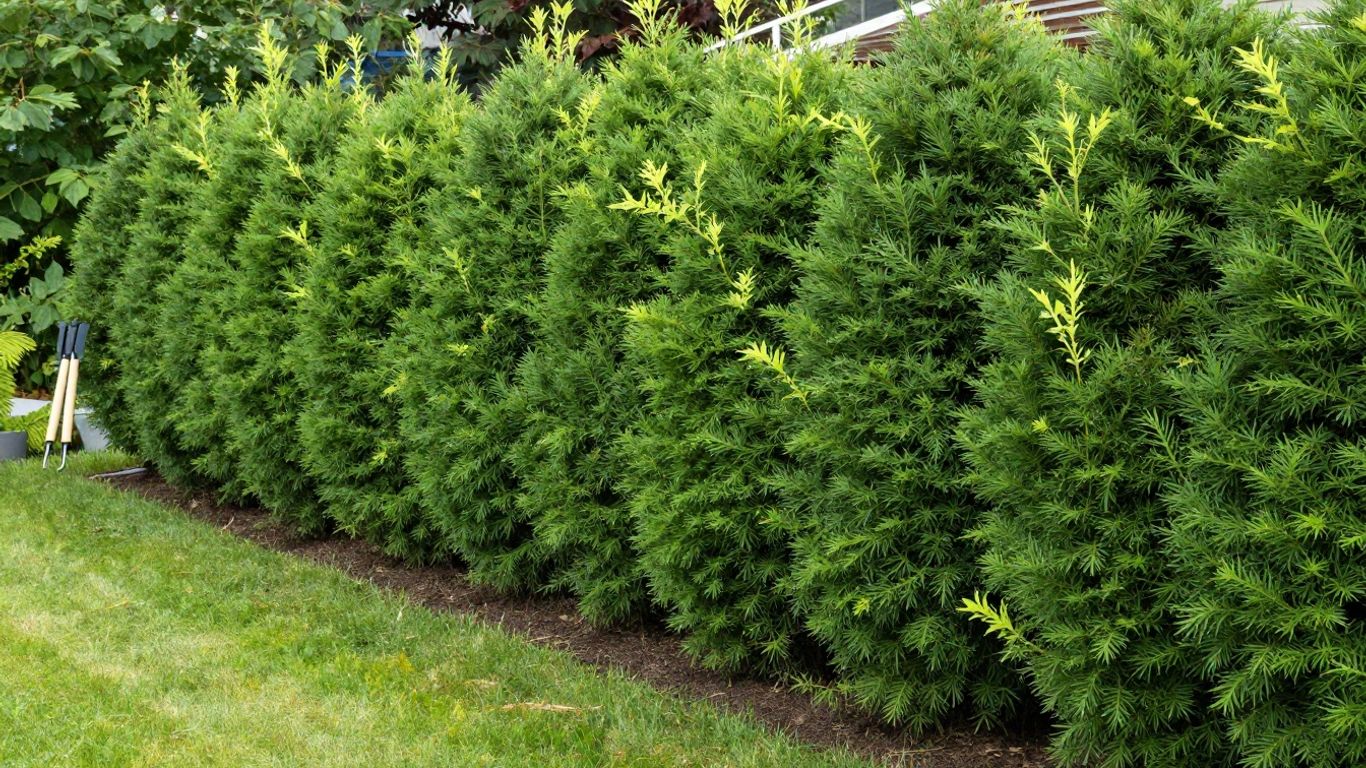
The goal is to remove part of the current season’s growth while leaving plenty of healthy green foliage. Choose a cool, reasonably calm day when the hedge is not already under drought stress. Clean tools, steady footing, and a clear plan matter just as much as the month on the calendar.
Why Late Summer Cuts Can Damage Cedar Before Winter
Late summer trimming can be acceptable in some conditions, but a severe cut close to autumn gives the hedge less time to recover before cold, wind, and dry winter conditions arrive. Freshly exposed foliage may also be more vulnerable if the plant is already short of water. If you must trim later, keep the work light, avoid heat waves, and do not remove large portions of the green outer layer.
A useful rule is to finish substantial shaping while the hedge still has a reasonable period of mild weather ahead. Regional guidance on cedar growth cycles and timing offers another perspective on working after new growth appears and avoiding extreme heat. In practice, your local microclimate, the hedge’s vigour, and the severity of the cut should guide the decision.
Signs Your Cedar Hedge Is Overdue for Cutting
An overdue hedge usually tells you before it becomes a major project. New growth may be extending unevenly over paths, windows, fences, or neighbouring space. The top can become wavy, the sides can bulge, and individual plants may start competing for light rather than forming one even screen.
Look closely at the base as well as the outline. If the lower branches are noticeably thinner than the upper growth, the hedge may be too narrow at the bottom or may have been shaded by repeated incorrect shaping. Brown patches, dead twigs, and weak sections deserve attention before you reach for a powered cedar hedge trimmer.
You should also consider practical warning signs. Branches may be brushing against structures, access around the property may be narrowing, or the hedge may be difficult to inspect for pests and damage. Where growth crosses a property line, discuss the work first; what to do about a neighbour’s overhanging tree explains why clear communication and local rules can matter before cutting.
Choosing the Right Cedar Hedge Trimmer for the Job
The best cedar hedge trimmer is the one that lets you make controlled cuts without forcing your shoulders, wrists, or footing into unsafe positions. Match the tool to the hedge’s thickness, height, length, and condition. A small hand tool may be ideal for finishing touches, while a powered tool can make a long, regularly maintained hedge more manageable.
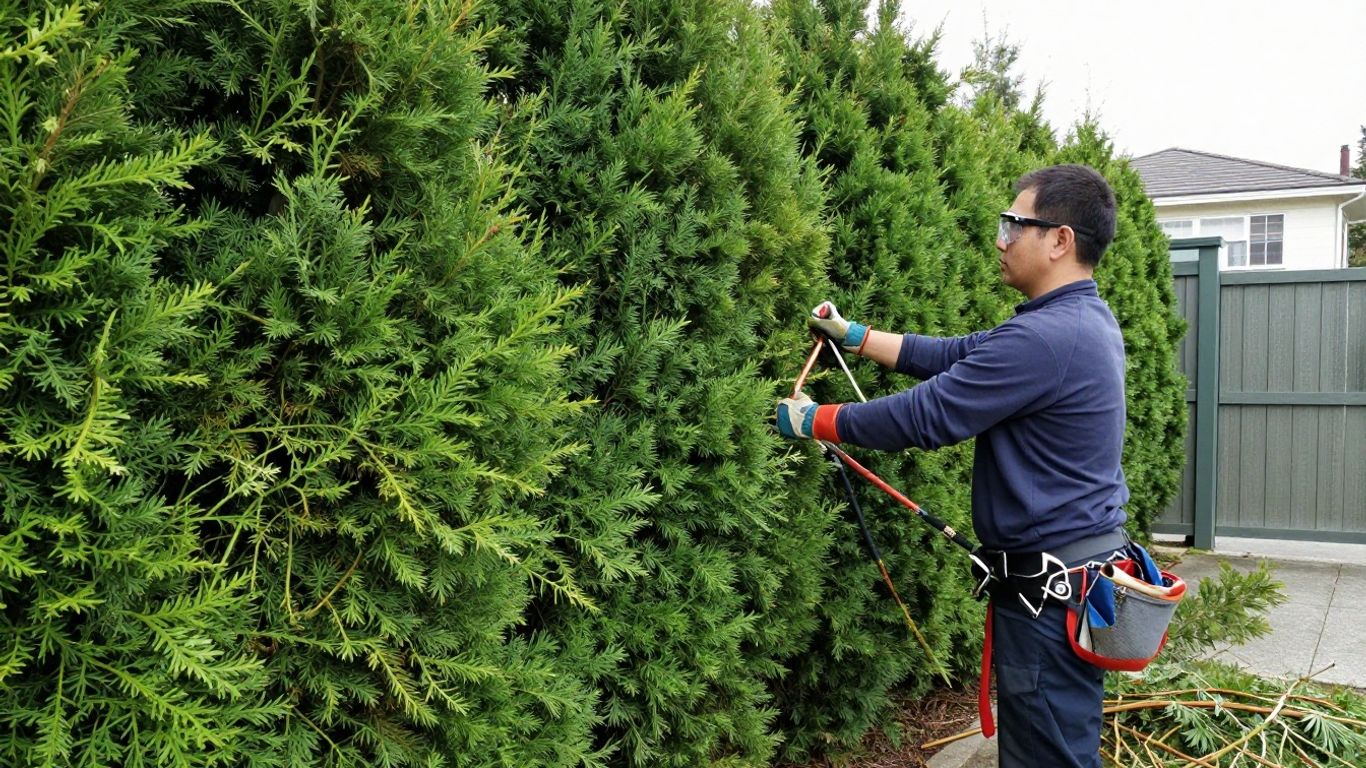
Before starting, inspect the blades, extension cord or battery, guards, and controls. Wear eye protection, sturdy footwear, and hearing protection when required. Never use a tool from an unstable ladder or reach farther than you can control safely.
Manual Shears vs. Powered Trimmers: What Actually Matters
Manual shears give you excellent control over individual shoots and are useful for small corrections, young hedges, and areas near delicate branches. Powered trimmers save time across long runs but can remove more material than intended in a single pass. Control matters more than speed when the hedge is uneven, overgrown, or close to a fence.
Use the tool that supports a steady, repeatable motion. If the hedge is tall, thick, or difficult to access from the ground, the limiting factor is no longer the blade; it is safe positioning. Professional aesthetic pruning services may be the sensible choice rather than stretching the reach of a tool beyond its safe use.
How to Shape a Cedar Hedge Without Damaging It
Start by deciding the finished height and width before you make the first cut. You can use stakes and a taut line as a visual guide for a long, formal hedge, but do not let a perfectly straight line tempt you to remove healthy foliage too aggressively. Step back often and check the whole run from several angles.
Shape the hedge so the base is a little broader than the top. This lets more light reach the lower growth and helps the screen stay green from bottom to top. Work gradually, especially if the current outline is far larger than the desired shape.
The “Never Cut Into Bare Wood” Rule Explained
The rule means you should be cautious about cutting past the green, foliated layer into old sections that have no living needles or sprays. Cedar may not refill those areas readily, leaving permanent holes. If a branch is long and green only near its tip, shorten it within that green zone rather than cutting it back to a bare stub.
When a hedge has already become bare inside, gradual reduction is usually safer than one dramatic correction. Remove a modest amount during the appropriate season, allow the plant to respond, and reassess the following year. Some damaged or dead branches may need a different decision, but large-scale cuts into leafless wood should not be treated as routine trimming.
Cedar Bush Pruning: Renewal Cuts for Thin or Leggy Growth
Cedar bush pruning calls for a different level of restraint when the plant is growing as an individual specimen rather than a clipped wall. First identify the main stems, natural outline, and direction of healthy growth. You want to improve structure without forcing a rounded or formal shape onto a plant that is better suited to a natural form.
Remove dead, broken, crossing, or badly positioned growth where appropriate. Make clean cuts near a suitable branch junction rather than leaving long stubs. If only one side is thin, avoid compensating by stripping the fuller side heavily; that often makes the imbalance more obvious.
For leggy growth, spread the work over time. A modest reduction can encourage a cleaner outline while preserving the green framework that keeps the plant attractive. If the interior is completely bare, renovation may have limits, and replacement or a more natural design may be more realistic than trying to recreate dense foliage instantly.
Step-by-Step: Trimming Cedar Shrubs the Right Way
Begin with a walk-around inspection. Check the ground for toys, stones, hoses, and irrigation lines, then look above for wires, branches, and obstacles. Decide where clippings will go and make sure you have a safe route around the hedge before turning on any equipment.
A practical sequence keeps the work calm and consistent:
- Mark the intended height and side profile with your eye or a guide line.
- Remove dead or damaged pieces with clean hand tools.
- Trim the sides in shallow passes, keeping the base slightly wider.
- Shape the top last so you can blend it with the finished sides.
- Step back, collect clippings, and inspect for missed uneven sections.
This order prevents the top from becoming the only reference point and reduces the temptation to keep cutting simply because loose shoots remain. Sweep or rake the area when you finish, and check the hedge again from inside the property as well as from the street.
Common Mistakes That Kill or Thin Out Cedar Hedges
The most damaging mistakes are often made with good intentions. You may be trying to make the hedge neater, correct years of neglect, or finish quickly before the weather changes. Cedar responds better to measured work than to a single dramatic reset.
Avoid these common problems when planning the cut:
- Cutting deep into old, leafless wood to achieve an instant narrow profile.
- Trimming during extreme heat, drought, or immediately before harsh weather.
- Making the top wider than the base and shading out lower growth.
- Removing far more than the current season’s green growth in one visit.
These errors can leave brown surfaces, weak recovery, and gaps that are difficult to hide. If the hedge is already thin, correct the underlying shape gradually instead of chasing a perfectly sharp outline on the first attempt.
A Real Job From Our Files: Reviving a Neglected Cedar Hedge
A neglected hedge rarely needs one heroic cut. The safer approach is to assess which sections are still green and vigorous, identify areas that have crossed into bare wood, and separate cosmetic overgrowth from genuinely dead or damaged material. That assessment tells you what can improve and what may not return.
Start by reducing the easiest excess growth while preserving the living outer layer. Where the hedge is uneven, blend transitions rather than creating abrupt steps. You may need to accept a slightly wider or taller result for a season while the plants recover and new growth fills the outline.
A renovation plan should also account for access and surrounding property. Heavy clippings, fences, gardens, and overhead obstacles can turn a simple-looking job into a difficult one. For broader hedge maintenance, Toronto hedge trimming services can provide a safer, more even approach when the hedge is long, tall, or badly overgrown.
How Often Should You Trim a Cedar Hedge?
The right schedule depends on how quickly the hedge grows and how formal you want it to look. A young hedge may need light shaping while it fills out, whereas an established hedge at its desired height often benefits from routine seasonal maintenance. Regular light work is generally easier on the plants than waiting until the outline is far beyond control.
Inspect the hedge during the growing season rather than relying only on a fixed reminder. If new shoots are extending well beyond the intended line, plan a suitable trim. If growth is sparse or the plant is stressed, solve watering, exposure, or health concerns before treating the shape as the main problem.
Your desired finish matters too. A natural screen can tolerate more variation than a formal clipped wall. Either way, consistency prevents the cycle of severe cutting followed by long neglect, which is one of the quickest ways to lose density and create permanent bare areas.
Watering and Feeding Cedars Around Trimming Season
A cedar hedge should not go into a major trim thirsty or already stressed by intense heat. During dry conditions, water deeply according to local restrictions and soil conditions, allowing moisture to reach the root zone rather than briefly wetting the surface. Avoid spraying foliage as a substitute for watering the soil.
After trimming, continue monitoring the root zone. Mulch can help conserve moisture and moderate soil temperature, provided it is kept away from direct contact with the stems. The benefits of mulch around root zones can help you choose a practical approach for moisture retention and weed suppression.
Fertilizer is not a repair for poor pruning. If growth is weak, first consider drainage, compaction, drought, light, and pest or disease symptoms. Feeding should be based on the site and the plant’s needs, not applied automatically after every cut.
FAQs About Cedar Hedge Trimming
Cedar hedge trimming raises a few recurring questions, especially when a hedge has become tall or uneven. Most answers come back to the same principles: preserve green growth, choose suitable weather, and reduce gradually. The following points can help you decide what to do next.
If you are uncertain about a brown section, inspect whether the stems still carry living green growth and whether the damage is isolated or widespread. Do not assume that every brown patch will refill after a hard cut. A cautious plan usually protects more options than an aggressive one.
You should also consider the hedge’s surroundings. Fences, gardens, sidewalks, neighbouring properties, and overhead hazards all affect how safely the work can be completed. When a question involves access or risk rather than simple technique, professional advice is often worthwhile.
When to Call a Professional for Cedar Hedge Cutting
You should consider professional help when the hedge is high enough that safe work would require a ladder, when the ground is sloped or obstructed, or when the hedge is close to wires and structures. The same applies when a large amount of old growth needs evaluation. A neat finish is secondary to keeping people, property, and the plants safe.
Call for help if you cannot tell whether a section is alive, if the hedge has substantial dieback, or if severe overgrowth crosses a property boundary. A professional can also help you set a realistic renovation plan instead of promising that bare wood will quickly become green again.
Heritage Tree Care Inc. provides hedge trimming, renovation, and restoration among its listed arborist services. For work involving larger trees or hazardous cutting nearby, documented tree-care safety standards can also help you understand why assessment and site preparation matter before equipment is used.
Book Cedar Hedge Trimming With Heritage Tree Care Inc.
If your hedge needs a careful seasonal trim, a gradual renovation, or a more even finished shape, start with an honest assessment of its current condition. Note the height, length, thin sections, access issues, and any areas where growth extends over a boundary. Clear details make it easier to plan the right scope of work.
Certified arborists at Heritage Tree Care Inc. list professional hedge trimming, aesthetic pruning, renovation, and restoration as part of their services. You can request an evaluation through Toronto tree and hedge services when the hedge is too tall, too dense, or too close to obstacles for comfortable do-it-yourself work.
Good cedar hedge cutting is not about removing the most material in the shortest time. It is about preserving useful green growth, improving the shape in stages, and leaving the hedge healthier and easier to maintain through the next season. Call Joseph Gillingham and the Heritage Tree Care Inc. team at 416-458-4745, or request an evaluation online to book an assessment.
Conclusion
With the right timing, a light touch, and a shape that keeps the base broader than the top, you can maintain a cedar hedge that stays dense and manageable. Inspect it regularly, avoid cutting into bare wood, and call for help when height or overgrowth makes the work unsafe.
Frequently Asked Questions
When is the best time to trim a cedar hedge?
The best window is usually after the main spring flush of growth, often from late June into summer, when fresh lighter-green shoots are visible. Local weather and the hedge’s condition should guide the exact timing.
How much can you cut from a cedar hedge?
For routine maintenance, remove only part of the current season’s green growth and leave a healthy foliated layer. Severe reductions should be planned carefully because old bare wood may not produce new dense growth.
Can you cut cedar back to bare branches?
You should avoid routine cuts into bare wood. Cedar may not refill those areas, so cutting deeply can leave permanent holes or brown patches.
Should a cedar hedge be wider at the bottom?
Yes. A slightly wider base allows more light to reach lower branches and helps the hedge remain full from ground level upward.
Can you trim cedar in hot weather?
It is better to avoid trimming during extreme heat or drought. Wait for milder conditions when possible, and ensure the hedge is adequately hydrated before and after the work.
How often should cedar hedges be trimmed?
Many established hedges benefit from seasonal inspection and light annual maintenance, but the schedule depends on growth rate and the desired appearance. Regular small cuts are usually easier to manage than infrequent severe cuts.
What should you do if a cedar hedge is already bare inside?
Do not assume a hard cut will restore it. Preserve the remaining green growth, reduce the hedge gradually, and consider professional advice if the bare areas are extensive or the hedge is structurally uneven.
Serving the Greater Toronto Area